
As research into natural mental health solutions expands, CBD oil emerges as a promising ally in the journey toward mental wellness. While some patients find relief using CBD pain cream Canada for physical symptoms, CBD oil’s interaction with the endocannabinoid system shows particular promise for emotional well-being.
Recent clinical studies suggest CBD oil may help regulate stress responses, reduce anxiety symptoms, and support better sleep patterns – all crucial factors in maintaining mental health. Unlike traditional psychiatric medications, CBD offers a gentler approach with fewer reported side effects, though it shouldn’t replace prescribed treatments without medical consultation.
This growing body of evidence points to CBD’s potential role in managing various mental health conditions, from everyday stress to more complex mood disorders. As researchers continue to unlock CBD’s mechanisms of action in the brain, understanding its effects on mental health becomes increasingly important for both healthcare providers and individuals seeking natural support options.
Note: Always consult healthcare professionals before incorporating CBD oil into your mental health regimen, as individual responses can vary, and proper dosing is essential for optimal results.
Understanding CBD Oil and Mental Health
The Endocannabinoid System
The endocannabinoid system (ECS) plays a crucial role in maintaining our body’s balance, including our mental well-being. This complex network of receptors and naturally occurring compounds helps regulate various functions, from mood and stress response to sleep and emotional processing. CBD works by interacting with this system, particularly with receptors known as CB1 and CB2.
When you experience stress or anxiety, your ECS might need support to maintain balance. CBD helps by enhancing the effectiveness of your body’s own endocannabinoids, rather than directly binding to receptors like THC does. This gentle approach explains why CBD can promote mental wellness without causing intoxication.
Think of the ECS as your body’s internal balance keeper, constantly working to maintain emotional stability. CBD acts like a supportive friend to this system, helping it function more effectively. By supporting the ECS, CBD may help regulate stress responses, emotional processing, and mood fluctuations, contributing to overall mental well-being.

CBD vs. Traditional Mental Health Medications
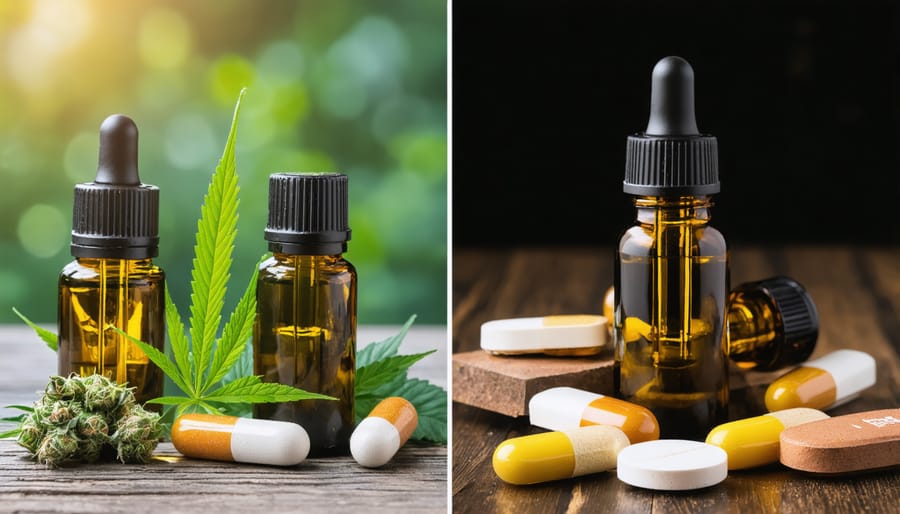
While traditional mental health medications like SSRIs and benzodiazepines have long been the standard treatment for conditions like anxiety and depression, CBD offers a different approach to mental wellness. Unlike conventional medications that often target specific neurotransmitters, CBD works with the body’s endocannabinoid system to promote overall balance.
Traditional medications typically come with a range of side effects, from drowsiness and weight changes to sexual dysfunction and withdrawal symptoms. CBD, in contrast, generally presents fewer and milder side effects, though research is still ongoing. However, it’s important to note that CBD isn’t meant to replace prescribed medications, and any changes to treatment should be discussed with a healthcare provider.
One key difference lies in accessibility – while traditional medications require prescriptions and regular medical supervision, CBD is more readily available. However, this easier access comes with its own challenges, including quality control and dosing consistency. The effectiveness of both approaches can vary significantly between individuals, and what works for one person may not work for another.
Remember that mental health treatment isn’t always an either/or choice – some people find benefits in combining traditional medications with CBD under proper medical guidance.
Research-Backed Benefits for Mental Health
Anxiety Relief
Research has consistently shown that CBD oil may provide significant relief for various types of anxiety disorders. Multiple clinical studies demonstrate CBD’s potential to reduce symptoms of generalized anxiety disorder (GAD), social anxiety disorder, and panic disorder. The compound works by interacting with the body’s endocannabinoid system, which plays a crucial role in regulating mood and stress responses.
A notable 2019 study found that 79% of participants experienced reduced anxiety levels within the first month of CBD use. The study also reported minimal side effects, making it an attractive option for those seeking natural anxiety relief. CBD appears particularly effective in reducing situational anxiety, such as public speaking fears, with participants reporting decreased heart rate and better emotional regulation during stressful situations.
The calming effects of CBD are attributed to its interaction with serotonin receptors in the brain, similar to how some traditional anti-anxiety medications work, but typically with fewer side effects. Dosage requirements vary by individual, but most studies suggest starting with 20-40mg daily for anxiety management.
While CBD shows promise as an anxiety treatment, it’s important to consult healthcare providers before beginning use, especially if currently taking other medications. The compound’s effects can vary among individuals, and finding the right dosage may require some adjustment under professional guidance.
Depression Management
Research suggests that CBD oil may offer promising benefits for individuals struggling with depression. Studies indicate that CBD interacts with the body’s endocannabinoid system, which plays a crucial role in regulating mood and emotional responses. This interaction may help alleviate symptoms of depression by influencing serotonin receptors in the brain, similar to how conventional antidepressants work.
Several clinical trials have shown encouraging results, with participants reporting improved mood and reduced depressive symptoms after regular CBD use. When combined with traditional depression management strategies, CBD oil may enhance overall treatment outcomes. However, it’s important to note that these findings are preliminary, and more research is needed to fully understand CBD’s antidepressant properties.
CBD’s potential benefits for depression may include reduced stress levels, improved sleep quality, and decreased anxiety – all factors that can contribute to better mental health. Some studies suggest that CBD’s anti-inflammatory properties might also play a role in managing depression, as inflammation has been linked to mood disorders.
While these findings are promising, it’s essential to consult with a healthcare provider before incorporating CBD oil into your depression treatment plan. They can help determine appropriate dosing and ensure it won’t interact with any current medications you may be taking.
Sleep and Stress
CBD oil has shown promising results in addressing two common mental health challenges: sleep disturbances and stress management. Research suggests that CBD can help regulate our body’s natural sleep-wake cycle, potentially improving sleep quality and duration. Many users report falling asleep more easily and experiencing fewer sleep interruptions when using CBD oil regularly.
When it comes to stress reduction, CBD oil works by interacting with the body’s endocannabinoid system, which plays a crucial role in regulating our stress response. Studies indicate that CBD may help lower cortisol levels – often called the “stress hormone” – leading to a more balanced emotional state. Users frequently report feeling more relaxed and better equipped to handle daily stressors without experiencing the sedating effects common to traditional anti-anxiety medications.
The calming effects of CBD oil can be particularly beneficial for those experiencing stress-related sleep issues. By addressing both stress and sleep simultaneously, CBD offers a natural approach to breaking the cycle of anxiety and poor sleep that many people face. However, it’s important to note that individual responses vary, and finding the right dosage and timing for your needs may require some adjustment under the guidance of a healthcare provider.
Potential Risks and Considerations
Side Effects and Interactions
While CBD oil is generally considered safe, it’s important to be aware of potential side effects and interactions. Some users may experience mild symptoms such as drowsiness, dry mouth, changes in appetite, or slight digestive issues. These effects are typically mild and often decrease as your body adjusts to the supplement.
It’s crucial to note that CBD can interact with certain medications, particularly those metabolized by the liver’s cytochrome P450 enzyme system. This includes many common prescription medications for mental health conditions, such as antidepressants and antipsychotics. CBD may either increase or decrease the effectiveness of these medications or potentially cause unwanted side effects.
If you’re taking any prescription medications, especially those for mental health conditions, always consult with your healthcare provider before starting CBD oil. This is particularly important if you’re using medications that carry a grapefruit warning, as CBD can affect your body in similar ways to grapefruit.
Some people may also experience changes in sleep patterns or mood when first starting CBD. While these changes are usually temporary, it’s important to start with a low dose and gradually increase it while monitoring your response. If you experience any concerning side effects, discontinue use and consult your healthcare provider immediately.
Remember that the quality and purity of CBD products can significantly impact potential side effects, so always choose products from reputable manufacturers with third-party testing.
Choosing Quality Products
When selecting CBD oil for mental health support, it’s crucial to prioritize quality and safety. Start by choosing products from reputable manufacturers who provide comprehensive third-party lab testing results. These tests, known as Certificates of Analysis (COAs), verify the product’s CBD content and ensure it’s free from harmful contaminants like pesticides and heavy metals.
Look for CBD oils that use organic hemp grown in regulated environments, preferably in countries with strict agricultural standards. The extraction method matters too – CO2 extraction is considered the gold standard, producing the purest form of CBD oil.
Pay attention to the product’s CBD concentration and type. Full-spectrum CBD contains all hemp plant compounds, including trace amounts of THC, while broad-spectrum offers similar benefits without THC. CBD isolate contains only pure CBD. Each type has its benefits, so consider your specific needs and sensitivity to THC.
Check the ingredient list carefully. Quality CBD oils should have minimal ingredients, typically just CBD extract and a carrier oil like MCT or hemp seed oil. Avoid products with artificial additives or unclear ingredient listings.
Finally, be wary of unrealistic health claims or suspiciously low prices. Legitimate CBD products require significant investment in quality production, and while they needn’t be extremely expensive, unusually low prices often indicate poor quality or synthetic ingredients.
Starting Your CBD Journey Safely
Consulting Healthcare Providers
Before starting CBD oil for mental health concerns, it’s essential to consult with healthcare providers who understand your complete medical history and current treatment plan. While CBD shows promise for various mental health conditions, professional guidance ensures safe and effective use.
Your primary care physician, psychiatrist, or mental health counselor can help evaluate whether CBD oil might benefit your specific situation. They can assess potential interactions with existing medications, recommend appropriate dosages, and monitor your progress. This is particularly important if you’re currently seeking professional mental health support or taking prescribed medications for mental health conditions.
Healthcare providers can also help you identify quality CBD products and develop an integrated treatment approach that may include CBD oil alongside other therapeutic strategies. They’ll work with you to establish realistic expectations and create a plan to track improvements or potential side effects.
Remember, open communication with your healthcare team is crucial for achieving the best possible outcomes in your mental health journey.
Dosage and Administration
When starting CBD oil for mental health support, it’s crucial to begin with a low dose and gradually increase it until you find what works best for you. Most experts recommend starting with 20-40mg per day, divided into two doses. You can increase this amount by 5mg each week until you achieve desired effects.
The delivery method matters – sublingual administration (holding the oil under your tongue for 30-60 seconds) typically offers better absorption than simply swallowing the oil. Take note that CBD can affect everyone differently, so what works for others might not work the same for you.
Time your doses consistently, preferably at the same times each day. Many people find taking CBD with food helps reduce any mild digestive discomfort. Keep a journal to track your dosage and its effects on your mental well-being.
Always consult with your healthcare provider before starting CBD, especially if you’re taking other medications. They can help determine the right starting dose based on your specific situation and monitor your progress.
CBD oil shows promising potential in supporting mental health, with research indicating possible benefits for conditions like anxiety, depression, and stress management. While many users report positive experiences, it’s crucial to remember that CBD oil is not a replacement for professional mental health treatment but rather a potential complementary tool in your wellness journey.
The evidence suggests that CBD may help regulate mood, reduce anxiety symptoms, and improve sleep quality – all important factors in maintaining good mental health. However, individual responses can vary significantly, and more research is needed to fully understand its long-term effects and optimal usage.
Before incorporating CBD oil into your mental health regimen, it’s essential to consult with healthcare professionals, particularly if you’re taking other medications. They can help you make an informed decision based on your specific circumstances and needs. Remember to choose high-quality, third-party tested products from reputable manufacturers to ensure safety and effectiveness.
As our understanding of CBD’s impact on mental health continues to evolve, staying informed about the latest research and maintaining open communication with healthcare providers remains crucial. While CBD oil shows promise as a natural support for mental wellness, approach it as part of a comprehensive mental health strategy that may include therapy, lifestyle changes, and traditional treatments when necessary.


