When an anxiety attack strikes, three evidence-based techniques offer immediate relief: deep breathing through your nose, grounding yourself through mindfulness, and using the 5-4-3-2-1 sensory method to anchor back to the present moment. These practices work by interrupting your body’s stress response and activating your parasympathetic nervous system, the part responsible for calming you down. Studies confirm that slow, deep breathing helps your body self-regulate and restore balance during moments of acute distress.
An anxiety attack can feel overwhelming and frightening, but you’re not powerless. The strategies outlined here are practical tools you can use anywhere, whether you’re at home, work, or in public. They require no special equipment and can be learned quickly. Understanding how to recognize when these techniques are working gives you confidence that you’re regaining control.
If your symptoms feel severe or you’re unsure whether you’re experiencing anxiety or a medical emergency, check with your doctor to rule out other health concerns. And if you’re in crisis or thinking about harming yourself, contact local emergency services or call or text 9-8-8 in Canada right now. You can also reach out for support through trained crisis counselors who understand what you’re going through.
Recognizing When You Need These Techniques
Anxiety attacks don’t always announce themselves the same way for everyone, but certain telltale signs indicate it’s time to use the techniques in this article. The key difference between everyday nervousness and an anxiety attack lies in intensity and impairment: everyday anxiety might make you feel jittery before a presentation, while an anxiety attack can leave you struggling to breathe, think clearly, or function normally.
You’ll know you need these strategies when you experience a sudden surge of overwhelming fear or discomfort that peaks within minutes. Common physical and emotional signs include:
- Racing or pounding heartbeat that feels out of your control
- Shortness of breath or feeling like you can’t get enough air
- Chest tightness or pain that mimics a heart attack
- Trembling, shaking, or sweating without physical exertion
- Dizziness, lightheadedness, or feeling detached from reality
- Intense fear of losing control, going crazy, or dying
These techniques work best the moment you recognize these symptoms building. Some people experience anxiety attacks in specific situations, such as those dealing with agoraphobia vs social anxiety while others face attacks that seemingly come from nowhere. Either way, early recognition gives you the best chance to intervene before the attack reaches full intensity. The strategies ahead are designed for that critical window when you feel control slipping but haven’t yet been fully overwhelmed.
What You Need Before an Anxiety Attack Strikes
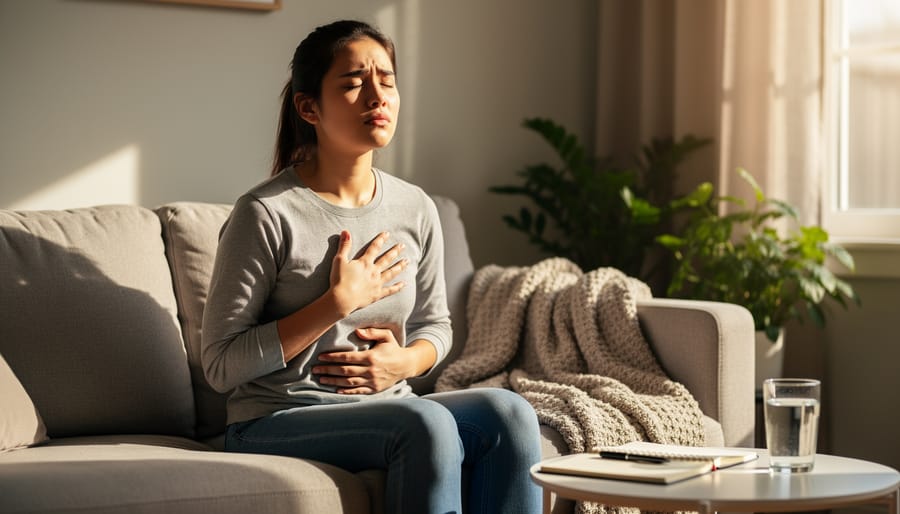
The good news about managing anxiety attacks is that your most powerful tools are portable: the breathing and mindfulness techniques you’re about to learn require no equipment and work anywhere. You don’t need special gear to find relief when an attack strikes.
That said, a few optional preparations can make these techniques easier to use in the moment:
- A quiet, comfortable space where you feel safe (your bedroom, a parked car, or even a bathroom stall)
- Loose, comfortable clothing that doesn’t restrict your breathing
- A glass of cool water nearby
- Headphones and a guided meditation app if audio helps you focus
- A familiar comfort object like a soft blanket or stress ball
Mental preparation matters more than physical items. Familiarize yourself with the breathing and grounding techniques before anxiety strikes so they feel automatic when you need them. Practice slow breathing through your nose during calm moments, and try a short mindfulness exercise when you’re not distressed. This builds muscle memory that kicks in during real attacks, making the techniques easier to apply when your mind is racing. Think of it like learning CPR: you want the steps clear in your head before an emergency, not figuring them out mid-crisis.
When to Seek Immediate Help Instead
While anxiety attacks are rarely dangerous on their own, certain situations require immediate medical attention rather than self-help techniques. If you experience chest pain, difficulty breathing that doesn’t improve, severe dizziness, numbness or tingling on one side of your body, or symptoms that feel distinctly different from your usual anxiety, seek emergency help immediately. These could indicate a heart attack, stroke, or other serious medical condition that mimics anxiety symptoms.
Before relying solely on anxiety management techniques, check with your doctor to rule out any underlying health concerns, especially if you’re experiencing physiological distress for the first time or your symptoms have changed. Conditions like thyroid problems, heart arrhythmias, and blood sugar imbalances can produce anxiety-like symptoms that require medical treatment. Remember that the techniques in this article are not diagnostic tools and cannot substitute for professional medical evaluation when your body signals something is seriously wrong.
Step-by-Step: How to Calm an Anxiety Attack
Step 1: Ground Yourself in the Present Moment
When panic floods your body, your mind races into worst-case scenarios and pulls you away from the present. Grounding techniques interrupt that spiral by anchoring your attention to what’s happening right now, not the catastrophic futures your anxiety is projuring.
Start with the 5-4-3-2-1 method: name five things you can see around you, four things you can physically touch, three sounds you hear, two things you can smell, and one thing you can taste. This simple inventory forces your brain to engage with concrete sensory details rather than abstract fears. Research confirms that grounding can calm anxiety by redirecting neural pathways away from the amygdala’s alarm signals.
Mindfulness works on the same principle but with broader application. It means observing your thoughts and physical sensations without judgment or resistance, noticing “my heart is racing” instead of fighting it or spiraling into “something is terribly wrong.” When you stop treating anxiety symptoms as emergencies that demand immediate solutions, you reduce the feedback loop that intensifies attacks. The goal isn’t to empty your mind or feel instantly peaceful; it’s to become present enough that your body recognizes it’s not in actual danger and can begin returning to baseline.
Step 2: Begin Slow, Deep Breathing
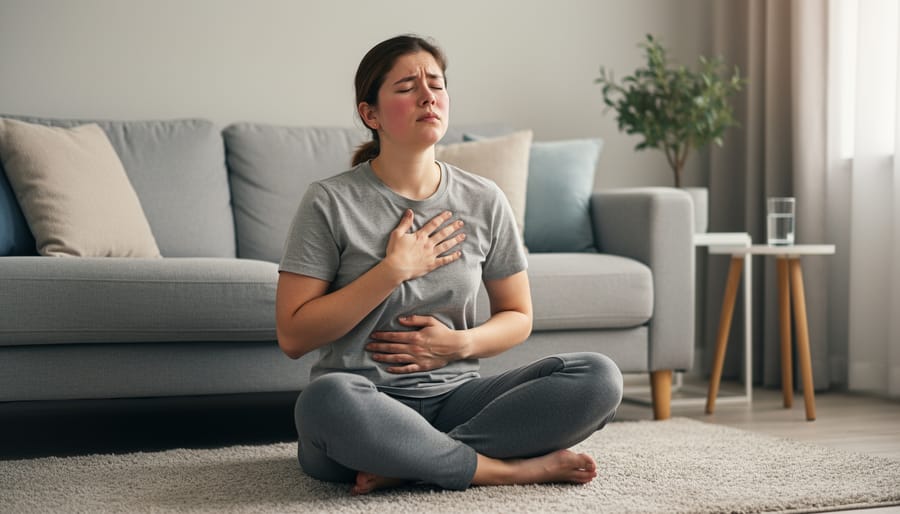
Once you’ve anchored yourself in the present moment, immediately shift your focus to your breath. Breathing in slowly through your nose for a count of four, hold briefly, then exhale gently through your mouth for a count of six. This extended exhale is the key, it signals your nervous system to switch off the fight-or-flight response that fuels the anxiety attack.
Studies confirm that deep breathing lowers stress by activating your parasympathetic nervous system, the body’s natural calming mechanism. When you breathe slowly and deeply, you’re sending a direct message to your brain that you’re safe. Your heart rate begins to slow, your muscles start to relax, and the flood of stress hormones begins to ebb.
Place one hand on your chest and one on your belly to monitor your technique. You want your belly to expand as you inhale, not just your chest, this ensures you’re taking full, diaphragmatic breaths rather than shallow panic breaths. Don’t worry if it feels awkward at first or if your breathing feels shaky. That’s normal during an anxiety attack. Just keep returning to the rhythm: slow inhale through the nose, longer exhale through the mouth.
The beauty of this technique lies in its simplicity and its proven ability to help the body self-regulate and return to balance. You’re not fighting the anxiety, you’re giving your body the physiological tools it needs to calm itself naturally.
Step 3: Repeat Until You Feel Calmer
Continue the breathing pattern without rushing it. An anxiety attack typically peaks within ten minutes, then gradually subsides. You won’t feel better instantly, and that’s normal. Keep your focus on the rhythm: slow inhale through your nose, controlled exhale, pause, repeat.
Watch for these signs that the technique is working: your heart rate begins to slow, the tightness in your chest eases, your thoughts become less frantic. You might notice your hands stop trembling or your breathing requires less conscious effort. Some people feel warmth returning to their extremities as their body’s stress response calms.
If your mind wanders to worst-case scenarios, gently redirect it back to counting your breaths. You’re not fighting the anxiety; you’re creating space for it to pass naturally. Most attacks lose intensity within fifteen to twenty minutes when you maintain steady, deep breathing.
Don’t stop the moment you feel slightly better. Continue for at least five more breath cycles after the panic subsides. This reinforces your body’s return to baseline and prevents a secondary wave of anxiety.
Step 4: Extend Your Practice with Mindfulness Meditation
Once your breathing has steadied and the immediate panic subsides, mindfulness meditation offers a pathway from basic relief to deeper calm. This practice builds on your grounding work by keeping your attention anchored in the present rather than cycling through anxious thoughts.
For beginners, guided meditation removes the guesswork. A 22-minute session can walk you through the process, offering clear instructions to help you stay present when your mind wants to wander. You don’t need prior experience. Just find a quiet spot, press play, and follow along.
The benefits extend beyond the moment. Research shows that mindfulness reduces distress and strengthens your ability to handle future episodes. Each practice session trains your brain to recognize anxious patterns earlier and respond more effectively.
Start with whatever length feels manageable. Even five minutes of mindful breathing counts. The goal isn’t perfection but consistency, teaching your nervous system that you can create calm when you need it most.
How to Know the Techniques Are Working

You’ll notice the techniques are working when your physical symptoms begin to ease and your thoughts start to clear. The tight chest loosens, your breathing slows naturally without conscious effort, and that overwhelming sense of dread starts to lift. Your heart rate drops closer to its normal rhythm, and you might feel a wave of relief or even exhaustion wash over you.
Physical and emotional signs that the attack is subsiding include:
- Your breathing returns to a normal pace without forcing it
- Muscle tension releases, particularly in your shoulders, jaw, and hands
- Racing thoughts slow down and you can focus on your surroundings
- The sense of impending doom or panic fades
- You can speak calmly or engage with others if needed
After the attack passes, give yourself time to recover. Drink water, rest if possible, and avoid rushing back into stressful situations. Many people feel drained afterward, which is normal. This is also a good moment to note what helped most, whether it was the breathing, grounding, or another technique. That insight will serve you well next time, building your confidence that you have tools that genuinely work.
Building Long-Term Resilience
The techniques you’ve learned aren’t just for crisis moments. When practiced regularly, they become powerful tools for preventing anxiety attacks before they start.
Think of mindfulness and deep breathing as exercises for your nervous system. Just as physical training strengthens your body, consistent practice builds your capacity to handle stress and recover from difficult emotions more quickly. Research confirms that regular mindfulness practice helps ground you, builds resilience, and improves overall wellbeing, even when you’re not experiencing acute anxiety.
Start small. Five minutes of mindful breathing each morning creates a foundation. Notice how your body feels when calm, so you can recognize early warning signs before they escalate into full attacks. Many people find that dedicating time to mindfulness meditation several times a week, whether through guided sessions or quiet sitting, reduces both the frequency and intensity of their anxiety episodes.
The skills you use during an attack work preventatively too. Practice grounding techniques during ordinary moments: feeling your feet on the floor during your commute, noticing your breath while waiting in line. This regular rehearsal makes the techniques automatic when you need them most.
Building resilience takes time, but each practice session strengthens your ability to navigate anxiety. You’re not just managing symptoms. You’re developing lasting mental fitness that supports you through all of life’s challenges.
Common Questions About Managing Anxiety Attacks
How long does it take for these techniques to work during an anxiety attack?
Deep breathing and grounding techniques can begin to bring relief within a few minutes of practice. Most people notice their physical symptoms starting to ease after repeating slow, deep breathing several times, though the full attack may take 20 to 30 minutes to subside completely.
When should I see a doctor about my anxiety attacks?
If you are experiencing physiological distress during what you believe are anxiety attacks, check with your doctor to rule out any health concerns. Physical symptoms like chest pain, severe shortness of breath, or dizziness can sometimes indicate medical conditions that need professional evaluation.
Can these techniques diagnose whether I have an anxiety disorder?
No, these grounding and breathing practices are not diagnostic in nature. They are relief tools that can help during moments of acute anxiety, but only a qualified healthcare professional can diagnose anxiety disorders or related conditions.
Can I use these techniques to help someone else having an anxiety attack?
Yes, you can guide someone through slow breathing or grounding exercises by speaking calmly and modeling the techniques yourself. Learning how to help a loved one through emotional crisis can make you a steadying presence when they need support most.
Remember that these evidence-based techniques offer practical relief during anxiety attacks, but they work alongside professional support rather than replacing it. If you find yourself experiencing frequent or severe attacks, reaching out to a mental health professional can help you develop a comprehensive treatment plan tailored to your specific needs.
You now have practical, proven techniques that can help when anxiety attacks strike. These aren’t just theories, slow, deep breathing, mindfulness, and grounding exercises are backed by research and can genuinely support your body in returning to balance. The more you practice them, even when you’re calm, the more naturally they’ll come when you need them most.
Remember, these techniques are tools for relief, not replacements for professional support. If anxiety attacks are disrupting your life, consider reaching out to a mental health professional who can provide personalized guidance. And if you’re experiencing chest pain, severe shortness of breath, or other concerning physical symptoms, check with your doctor to rule out any underlying health concerns.
Your experience with anxiety is valid, and relief is possible. You’ve taken an important step by learning these techniques. With practice and support, you can build the resilience to navigate anxiety attacks with greater confidence and calm.