Researchers verify a peptide’s identity by comparing what’s actually in the vial against what the label claims, using lab testing before any study begins. Suppliers such as Kylo Labs publish testing documentation precisely because identity checks are the foundation of credible research. The core method is simple: confirm the molecular weight with mass spectrometry, check purity with chromatography, and match both results to a trusted reference document. It takes a few days to a couple of weeks, depending on the lab, and the main prerequisite is a documented sample from a supplier willing to share its paperwork.
Why does this matter? A peptide that isn’t what it says it is can undermine an entire study, and it raises real safety questions for anyone curious about these compounds.
If you’re a student, a newer researcher, or simply a cautious reader trying to understand the process, you don’t need a chemistry degree to follow along. This guide walks through what you’ll need, when to stop and walk away, the verification steps in order, and how to read your results. Nothing here covers personal use or dosing. For decisions about your own health, a healthcare professional is the right person to ask.
Why Confirming a Peptide’s Identity Comes First
If you’ve ever searched for peptides online, you know how overwhelming it can get. Labels look official, claims sound confident, and it’s hard to tell what’s reliable. That confusion is understandable, and it’s exactly why researchers treat identity as the very first checkpoint.
Three simple questions sit at the heart of quality control. Identity asks whether this is actually the right molecule. Purity asks how much of the vial is something else, such as leftover manufacturing byproducts or contaminants. Quantity asks how much of the real peptide is truly there, since a vial can be the right substance but contain far less (or more) than the label says. A product can pass one question and fail another, which is why each gets checked on its own. Resources on peptide purity testing show how separate these checks really are.
Why does this matter so much? A mix-up or mislabeled product means a study may be measuring the effects of something entirely different from what the researchers believe. Contamination can muddy results or introduce harmful substances. And if people are ever exposed to an unverified product, the risk is real and personal, not just a scientific inconvenience.
Public health bodies and research quality standards consistently stress that materials should be characterized and documented before use, not assumed safe because a label says so. Confirming identity first protects participants, keeps results trustworthy, and spares everyone from building conclusions on a shaky foundation.
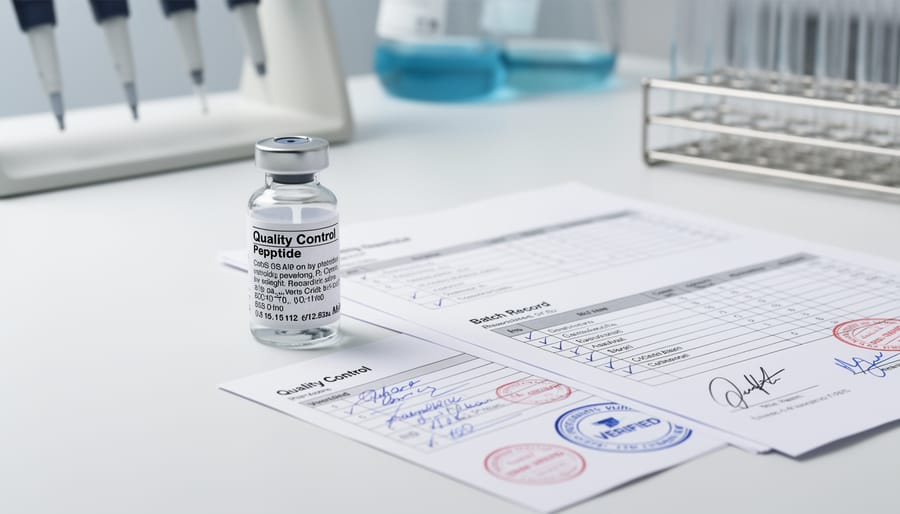
What You Need Before You Start: Documents, Samples, and Lab Resources
Before any testing starts, researchers gather a small set of materials. Think of it as laying everything out on the table before you begin, so nothing gets missed later. Here’s what’s on the checklist:
- Supplier documentation, which shows who made the peptide and how it was described when it was sold.
- A certificate of analysis, the supplier’s own report of what they say they found when they tested the batch.
- Lot or batch information, the specific code that ties the vial in your hands to one particular production run.
- A reference sample or standard, a trusted, well-characterized version of the same peptide used as the “answer key” for comparison.
- Access to an accredited independent laboratory, meaning an outside lab with no stake in the sale and recognized quality credentials.
- A clear record-keeping system, such as a dated log or spreadsheet where every document, result, and decision is written down.
Each item does a different job. The paperwork tells you what the supplier claims. The lot number keeps those claims attached to the right product, so a report for one batch isn’t mistaken for another. The reference sample gives the lab something real to compare against, rather than guessing. And the independent lab provides an unbiased second opinion, which is the heart of the whole process.
The records matter more than they might seem. If a question comes up months later, a tidy log lets anyone retrace exactly what was checked and when. It’s a small habit, but it’s what keeps the process honest and the science trustworthy.
Safety Warnings and Red Flags That Mean Stop
Before any testing begins, it helps to know when to pause. Stopping is not a sign you’ve done something wrong. It’s how careful researchers keep people and results safe.
Start with handling. Store peptides according to the supplier’s stated conditions, keep each vial clearly labeled, and keep unverified material separate from anything already confirmed. If a vial looks different from what you expected, such as cloudy, discolored, or leaking, set it aside.
A supplier’s paperwork is a starting point, not the final word. Documents can be incomplete, outdated, or simply wrong, which is why independent testing exists.
Pause and reassess if you notice any of these:
– No batch or lot number, or one that doesn’t match the vial
– Test results that don’t line up with the label
– Vague, generic, or recycled documents that could apply to any product
– A seller who discourages independent testing or gets defensive when asked
Peptides should only be used in people under qualified medical supervision. Reading about a product online isn’t a substitute for a clinician who knows your health history. If you’re thinking about trying something, talk with a doctor or pharmacist first.
It’s also normal to feel anxious or overwhelmed when sorting through health claims. If that stress starts to weigh on you, a mental health helpline can offer support while you work through your next steps.
The Step-by-Step Verification Process

Checking the Paperwork First
Before any sample goes to a lab, researchers read the paperwork closely, because it can reveal problems that would otherwise cost money to discover. A certificate of analysis should name the exact peptide, list a lot number, show purity results, and carry a date and the testing lab’s details. This is a core part of vetting research peptides before they ever reach a study.
Here is the sequence researchers commonly follow:
- Log the shipment on arrival, noting the date, condition, and storage temperature.
- Match the lot number on the vial to the lot number on the certificate.
- Confirm the peptide name and quantity are identical on the label and the document.
- Check the certificate’s dates, lab name, and test methods for anything vague or oddly generic.
- Compare against earlier certificates from the same source, watching for recycled or copied results.
- Quarantine the vial until independent testing is complete, then record the final approval in writing.
Mismatched numbers or missing details don’t automatically mean bad faith, but they do mean the batch waits.
Independent Testing: What the Lab Is Actually Checking
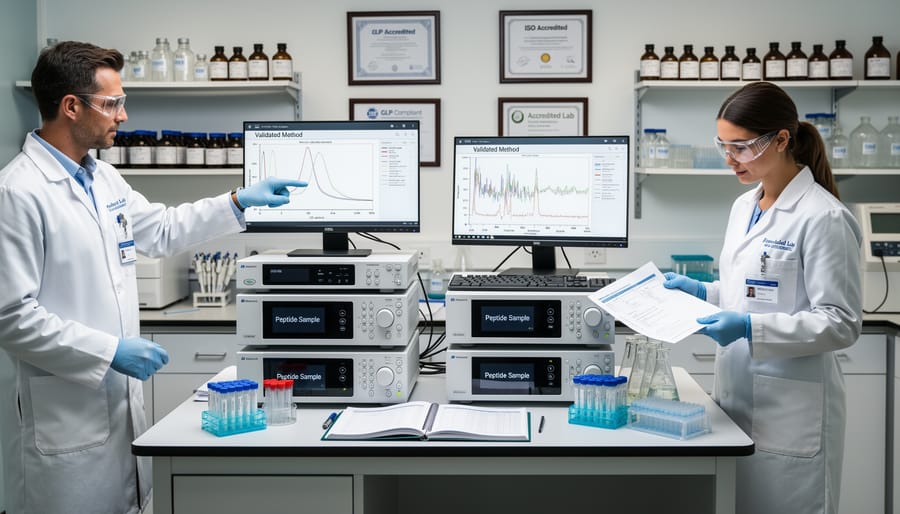
When a sample goes to an outside lab, the analysts are asking three plain questions. Is this the right molecule? How much of the vial is that molecule? And what else is in there?
To answer the first, many labs use mass spectrometry. Think of it as a very precise scale for molecules. Every peptide has an expected weight based on its building blocks, and if the measured weight doesn’t match the reference, something is off. Some labs also check the sequence, the order of those building blocks, because two different peptides can sometimes weigh nearly the same.
Purity and quantity usually come from chromatography. This technique separates a sample into its individual components, so the lab can see the main peptide alongside any leftover byproducts or contaminants. The size of each signal shows how much of the vial is the intended peptide.
Independence matters because the lab has nothing to gain from a particular result. A supplier testing its own product has a built-in incentive to report good news. An outside lab reports what it measures, which is why researchers treat its findings as a check on the paperwork rather than a repeat of it.
How to Read the Results and Decide What Happens Next
A matching result is the outcome you’re hoping for, and it’s easy to recognize. The lab’s measured molecular weight lines up with the reference, the purity figure meets the threshold set before testing, and the quantity falls within an acceptable range of what the label claims. Every lot number on the paperwork, the vial, and the lab report is identical.
When something doesn’t line up, researchers pause. A borderline result, such as purity just under the cutoff, isn’t treated as “close enough.” The batch is quarantined, meaning it’s set aside, clearly marked, and kept away from any study material. Next comes a call to the supplier for an explanation, followed by a retest, ideally at a second independent lab. If the numbers still disagree, the usual answer is to switch sources and start the checks again.
Throughout, everything gets written down: the lot number, the dates, the lab’s name, the raw report, and who approved the decision. That record lets others see exactly why a batch was accepted or rejected, which is where research earns its credibility. Reviewing results carefully can feel stressful, much like the worry people describe when connecting sleep and anxiety but a clear process takes the guesswork out of it.
A study proceeds only when identity, purity, and quantity all pass and the paperwork is complete. If verification fails, that’s the system working as intended, not a mark against the researcher. Catching a problem before the study begins is the whole point.
Common Questions About Peptide Verification
Verification raises a lot of questions, and it’s normal to feel unsure about where to begin. Here are some of the ones people ask most often.
Can I trust a supplier’s certificate of analysis?
Treat it as a starting point, not the final word. Researchers compare it against the label and lot number, then confirm the results with an independent laboratory.
Can verification be done at home?
No. Confirming a molecule’s identity, purity, and quantity takes specialized lab equipment and trained analysts, so home methods can’t give reliable answers.
Does verification mean a peptide is safe or approved for use?
No. It only shows that the vial contains what the label says. Safety and approval are separate questions that depend on clinical evidence and regulatory review.
Why do some studies skip this step, and why is that a concern?
Some teams rely on supplier paperwork to save time or money. That’s risky, because a mislabeled or contaminated product can quietly undermine the results and put participants at risk.
If you’re unsure about a particular peptide, look to sources that show their evidence: peer-reviewed studies, regulatory agencies, and qualified pharmacists or physicians. Be cautious with sellers or social media posts that make big promises without independent testing to back them up.
It’s also easy to feel overwhelmed when you’re sorting through health claims. If that sounds familiar, our guide to evidence-based relief offers calm, practical support. And for any decision about your own health, please talk with a doctor or pharmacist who knows your situation. They can help you weigh your options safely.
Careful verification isn’t a box to tick. It’s the foundation that makes research worth trusting. Researchers don’t take a label at its word. They check the paperwork, ask an independent lab to confirm what’s in the vial, and write down what they find before anything moves forward.
You can borrow that same mindset whenever you meet a health claim. Ask where the evidence comes from. Look for confirmation from sources that have nothing to sell. And when something affects your own body, bring it to a professional who knows your situation.
If all this health information leaves you feeling anxious or unsure, that’s a very normal reaction. You don’t have to sort through it alone, and you don’t have to decide quickly. Take your time, lean on expert-backed Head Space resources when you want clear and calm guidance, and talk with your doctor or pharmacist about anything personal. Asking good questions is a strength, and it’s exactly how careful people stay safe.