The cycle of anxiety is a self-reinforcing pattern where worry about a situation leads to avoidance, which temporarily eases discomfort but strengthens the fear over time. When you dodge the meeting, skip the social event, or procrastinate on the task that makes your heart race, you might feel relief in the moment. But that avoidance sends a powerful message to your brain: this thing truly is dangerous. Without the chance to discover you can handle the situation, the anxiety grows stronger, and the cycle tightens its grip.
This pattern affects more people than you might realize. Over half of Canadians now consider anxiety and depression an epidemic, and understanding how this cycle operates is the first step toward breaking free from it. The mechanism is both simple and insidious. Your nervous system treats the avoided situation as a confirmed threat. Each time you step away, you lose an opportunity to learn that the feared outcome rarely happens, or that you’re more capable of coping than you believed.
What makes this cycle particularly challenging is how reasonable avoidance can feel. Your brain is doing exactly what it evolved to do: protect you from perceived danger. The problem is that modern anxiety often centers on situations that aren’t actually dangerous, like speaking up in meetings, setting boundaries, or facing uncomfortable emotions. The more you avoid, the more your world can shrink.
This article will walk you through how the anxiety cycle operates at a clinical level, help you recognize the different forms it takes in daily life, and show you evidence-based strategies to interrupt the pattern and reclaim your confidence.
What the Cycle of Anxiety Means
The cycle of anxiety is a pattern where anxiety triggers avoidance, which then strengthens the anxiety itself. You feel worried or fearful about a situation, maybe a social event, a difficult conversation, or a task that feels overwhelming, and you sidestep it to escape the discomfort. That avoidance brings immediate relief, but it also sends a powerful message to your brain: the thing you avoided really was dangerous. Over time, this creates a loop that makes anxiety grow stronger rather than fade.
Anxiety itself isn’t the problem. It’s a normal response to stress or perceived threats, designed to keep you alert and safe. Feeling nervous before a job interview or uneasy about a health concern is your mind doing its job. The trouble starts when anxiety stops being a signal and becomes a self-reinforcing cycle. Instead of learning that you can handle the situation, you learn to avoid it, and each avoidance confirms that you were right to be afraid.
- Anxiety
- A normal emotional response to stress or perceived threats, marked by feelings of worry, apprehension, or unease that prepare the body and mind to respond to challenges.
- Cycle of Anxiety
- A self-perpetuating pattern where experiencing anxiety leads to avoidance, which temporarily reduces discomfort but ultimately reinforces and intensifies the anxiety over time.
- Avoidance Behavior
- The act of steering clear of situations, thoughts, or activities that trigger anxiety, providing short-term relief but preventing the opportunity to learn that you can cope.
- Reinforcement
- The process by which avoidance strengthens anxiety by confirming the false belief that the feared situation is genuinely dangerous, making future anxiety more likely and more intense.
The distinction between healthy anxiety and a problematic cycle comes down to what happens next. Healthy anxiety motivates you to prepare or take action, then subsides once you’ve addressed the challenge. In the cycle, anxiety leads you away from the challenge entirely. You never get the chance to discover that the fear was manageable, so the next time the situation comes up, the anxiety returns, often stronger than before. What started as a protective response becomes a trap, and the more you avoid, the tighter that trap feels.
How the Cycle of Anxiety Works

The Relief-Reinforcement Trap
When you avoid something that makes you anxious, your body experiences immediate relief. Your heart rate slows, your muscles relax, and the uncomfortable sensations fade. This feels like a solution, you escaped the threat, and now you’re safe. But this relief is exactly what traps you in the cycle.
Each time you avoid a feared situation, your brain logs it as confirmation: “That was dangerous. Good thing we got out of there.” The anxiety about that situation grows stronger because you’ve reinforced the idea that it’s something to fear. You never get the chance to discover that you could have handled it, that the catastrophe you imagined wouldn’t have happened, or that the discomfort would have passed on its own.
Over time, avoidance increases anxiety rather than reducing it. The situations you fear multiply and expand. What started as anxiety about public speaking might grow into anxiety about meetings, then phone calls, then any conversation where you might be evaluated. The temporary relief becomes the bait in a trap that makes your world progressively smaller.
Why Your Brain Believes the Threat Is Real
Your brain is designed to keep you safe, and when it perceives a threat, it learns from what happens next. When you avoid something that makes you anxious, you never discover whether the feared outcome would actually occur. Instead of learning “I can handle this” or “this wasn’t as dangerous as I thought,” your brain files the experience under “real threat confirmed, you had to escape.” This is how avoidance blocks corrective learning: each time you sidestep a situation, you reinforce the belief that it was genuinely dangerous.
The problem compounds because your brain’s threat-detection system grows more sensitive with repeated avoidance. If you consistently dodge social events, for instance, your anxiety about them intensifies rather than fades. Your amygdala, the brain’s alarm center, doesn’t get the chance to update its risk assessment with real-world data showing that the situation is manageable. Without exposure, there’s no opportunity for your brain to recalibrate and recognize that you can cope. The feared scenario remains frozen in your mind as catastrophically dangerous, and your anxiety response stays locked at full volume every time you encounter a similar situation.
Common Types of Anxiety Cycles
The anxiety cycle doesn’t look the same for everyone, but the underlying pattern remains consistent. Whether you’re avoiding a crowded room, putting off a doctor’s appointment, or sidestepping a challenging project, the same mechanism is at work. Recognizing how the cycle manifests in different areas of your life helps you spot the pattern before it takes hold.
- Social anxiety: Declining invitations or leaving events early to avoid judgment, which prevents you from discovering that most social interactions go fine
- Health anxiety: Skipping medical appointments because thinking about your health triggers panic, reinforcing the belief that something must be seriously wrong
- Performance anxiety: Procrastinating on work tasks or presentations due to fear of failure, which increases pressure and confirms your worry that you can’t handle it
- Generalized worry: Avoiding decisions or planning to escape the discomfort of uncertainty, which keeps anxiety high because nothing gets resolved
People often wonder about the difference between social anxiety vs agoraphobia since both involve avoidance of situations. While social anxiety centers on fear of judgment in social settings, agoraphobia involves fear of being in places where escape feels difficult. Despite the distinction, both follow the same cycle: anxiety leads to avoidance, avoidance brings temporary relief, and that relief strengthens the anxiety for next time.
What ties these patterns together is the way your brain learns from what you do, not from what you think. When you avoid a situation that makes you anxious, your brain logs that as confirmation the situation was genuinely threatening. You never get the chance to collect evidence that contradicts your fear. The cycle tightens whether you’re worried about saying something awkward at a party, discovering a health problem, bombing a presentation, or making the wrong choice. Each avoidance feels like self-protection in the moment, but it’s actually feeding the pattern you’re trying to escape.

Breaking the Cycle: How This Pattern Is Addressed
Gradual Exposure and Learning to Cope
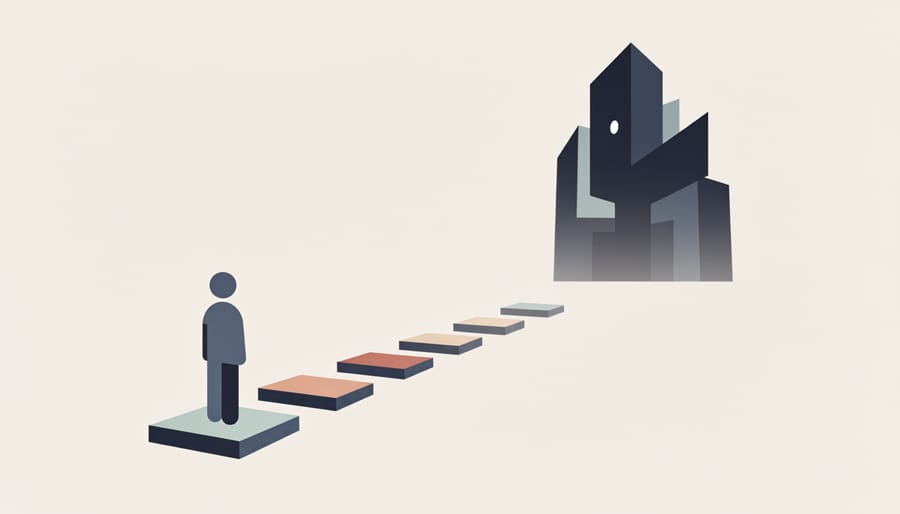
The most effective way to disrupt the anxiety-avoidance loop is through gradual, controlled exposure to the situations you fear. This approach works because it gives your brain the chance to gather new evidence, proof that you can tolerate discomfort and that feared outcomes often don’t materialize. When you deliberately face what you’ve been avoiding, even in small doses, exposure breaks the cycle by preventing the reinforcement that keeps anxiety strong.
Start small. If social situations trigger your anxiety, you might begin by making brief eye contact with a cashier rather than avoiding it, then work up to small talk, and eventually to larger gatherings. The key is to stay in the situation long enough for your anxiety to peak and then naturally decrease, which teaches your nervous system that the threat was overestimated. This isn’t about forcing yourself into overwhelming situations, it’s about building tolerance gradually, at a pace that feels challenging but manageable.
Each successful exposure weakens the cycle’s grip. You’re replacing the old story (I can’t handle this, I must avoid it) with new data (I felt anxious and stayed, and I’m okay). Over time, these experiences accumulate, and what once felt impossible becomes routine. Pairing exposure with evidence-based relief techniques can make the process more sustainable and help you manage the discomfort that naturally arises along the way.
Finding Support That Fits
Breaking the anxiety cycle isn’t one-size-fits-all, and that’s an important reality to acknowledge. The intervention that helps one person might not resonate with another, and that’s completely okay. In fact, more than half of Canadians have stepped away from mental health care earlier than planned, not just because of wait times, but because it didn’t feel like the right fit. That decision to step away when something isn’t working isn’t failure; it’s self-awareness.
The goal is to reach out for support and then find an approach that actually resonates with you. Some people respond well to structured therapy programs, while others benefit more from peer support groups or self-directed strategies. Some need a therapist who takes a direct, skills-focused approach, while others need someone who emphasizes understanding and validation first. The specific method matters less than whether it feels effective and sustainable for you.
If something isn’t working, that’s useful information. It tells you to keep looking rather than to give up entirely. The right fit exists, it just might take some exploration to find it.
Frequently Asked Questions
How do you know if you’re caught in the cycle? The clearest sign is noticing a pattern where anxiety about a situation leads you to avoid it, which brings temporary relief but leaves the anxiety intact or stronger next time. You might find your world gradually shrinking as you avoid more situations, or notice that the brief comfort of avoidance gives way to worry about future encounters with the same trigger.
How do I know if I’m stuck in an anxiety cycle?
You’re likely in the cycle if you notice a repeating pattern where anxiety prompts avoidance, avoidance brings short-term relief, but the underlying anxiety remains or grows stronger. Your list of avoided situations may be expanding over time.
Can I break the cycle on my own?
Some people can disrupt milder patterns independently using gradual self-exposure and awareness techniques, but many benefit from professional support. There’s no shame in seeking help, and finding an approach that feels like the right fit makes a significant difference in outcomes.
How does avoidance reinforce anxiety?
When you avoid a feared situation, you never get the chance to learn that you can handle it or that it’s less dangerous than you believed. This lack of corrective experience keeps your brain treating the situation as a genuine threat.
What if my anxiety is too intense to face?
Overwhelming anxiety doesn’t mean you have to confront everything at once. Start with smaller, manageable steps, and if you’re experiencing severe physical symptoms, techniques like air hunger steps can help you regain control during acute moments.
Breaking the pattern takes time, and the timeline varies widely depending on how long the cycle has been operating and how deeply it’s entrenched. Some people notice shifts within weeks of beginning exposure work, while more established patterns may take months of consistent effort. What matters more than speed is direction: each time you choose to stay present instead of avoiding, you’re teaching your brain new information about what you can handle.
The cycle of anxiety is a learned pattern, which means it can be unlearned. Recognizing that anxiety and avoidance reinforce each other is the first step toward breaking free. When you understand the mechanism, that avoiding what scares you provides immediate relief but strengthens anxiety over time, you gain the insight needed to interrupt the cycle.
Breaking this pattern is possible, but it requires the right support and approach for you. Given that more than half of Canadians have stepped away from mental health care because it didn’t feel like the right fit, finding a therapeutic approach that resonates with you matters. There’s no single solution that works for everyone, and stepping away when something isn’t working doesn’t mean you’ve failed. It means you’re looking for what will actually help.
Change takes time and often feels uncomfortable, especially when it involves facing what you’ve been avoiding. But with patience, the right guidance, and a willingness to try new responses, the cycle can be disrupted. If anxiety has been limiting your life, seeking support that feels right is a meaningful step forward.