Communication styles are the distinct patterns of expressing thoughts, feelings, and needs in conversation, shaped by personality, environment, and emotional state. When mental distress enters the picture, these patterns can shift dramatically. Anxiety might turn an assertive communicator passive, while depression can silence someone who once spoke openly. Understanding the six core communication styles gives you a framework to recognize what’s happening in your conversations and why they sometimes feel harder during difficult times.
The way you communicate when you’re struggling matters deeply. It affects whether you get the support you need, how others respond to you, and ultimately, how you move through mental health challenges. Research shows that communication patterns can both reflect and reinforce emotional states. Someone using a passive style during depression may inadvertently isolate themselves further, while aggressive communication born from anxiety can push away the very people trying to help.
The six communication styles exist on a spectrum, each with unique characteristics that become more pronounced under mental distress. Passive communicators struggle to voice their needs. Aggressive ones express themselves through hostility. Passive-aggressive individuals mask their true feelings with indirect resistance. Assertive communicators balance self-expression with respect for others. Manipulative styles use deception to meet personal needs. Submissive patterns involve excessive deference that erases personal boundaries.
This article breaks down each style with a specific focus on how mental health challenges influence these patterns. You’ll learn to identify your default style, recognize when distress is changing how you communicate, and discover practical strategies to move toward healthier expression even when you’re not at your best. Because knowing how you communicate is the first step to asking for what you actually need.
What the 6 Communication Styles Mean
Communication styles are the habitual ways we send and receive messages, the patterns we fall into when we speak, listen, react, and connect. They’re not just about the words we choose. They include tone of voice, body language, facial expressions, and the underlying attitudes we bring to every conversation. Think of them as your default settings for interaction, shaped by personality, upbringing, past experiences, and emotional state.
Everyone has a dominant communication style, though it can shift depending on context, stress levels, and who you’re talking to. Some people naturally express their needs directly. Others hint, withdraw, or dominate. These patterns become deeply ingrained, often without conscious awareness.
- Communication style
- The characteristic way someone expresses thoughts, feelings, and needs in interactions, encompassing both verbal and non-verbal behaviors.
- Behavioral pattern
- A repeated, predictable way of responding or acting in communication situations, often automatic and influenced by past experiences.
- Verbal cues
- The spoken elements of communication, including word choice, tone, volume, and pace of speech.
- Non-verbal cues
- Unspoken signals such as body language, eye contact, gestures, and facial expressions that convey meaning alongside or instead of words.
- Assertiveness
- The ability to express one’s own needs, feelings, and boundaries clearly and respectfully while honoring others’ rights and perspectives.
During mental health challenges like anxiety, depression, or crisis, communication styles matter even more. When you’re struggling, your ability to advocate for yourself, ask for help, or set boundaries can be compromised. Stress amplifies existing patterns: passive communicators may withdraw further, aggressive ones might lash out. Recognizing these shifts helps you understand your own reactions and respond to others with greater compassion. Clear, honest communication becomes a vital tool for getting the support you need and maintaining relationships during difficult times.
How Communication Styles Work During Mental Distress

Communication styles aren’t fixed personality traits, they’re learned patterns that develop through years of social interactions, family dynamics, and coping mechanisms. Most people naturally develop one or two dominant styles by observing how the adults around them handled conflict, expressed needs, and managed emotions during childhood. These patterns become automatic responses that guide how we speak, listen, and connect with others.
Mental distress fundamentally changes how these communication patterns function. When someone experiences anxiety, their threat-detection system goes into overdrive, making assertive expression feel impossibly risky. A normally balanced communicator might shift toward passive or passive-aggressive styles because fear of judgment or conflict overwhelms their ability to speak directly. The internal dialogue becomes louder than the actual conversation.
Depression alters communication through a different mechanism, it depletes the emotional and cognitive resources needed for healthy interaction. Common depression symptoms like fatigue, hopelessness, and difficulty concentrating make even simple conversations exhausting. Someone who typically communicates assertively may withdraw into passive or submissive patterns because mustering the energy to express needs feels impossible. The belief that nothing matters anyway silences them.
Acute crisis situations create additional shifts. During panic attacks, emotional flashbacks, or suicidal ideation, the brain’s stress response hijacks normal communication pathways. The prefrontal cortex, responsible for measured thinking and expression, essentially goes offline while the amygdala floods the system with survival signals. This explains why someone might lash out aggressively during a crisis despite typically being calm, or why they shut down completely when they desperately need help.
Past trauma also shapes these patterns in lasting ways. Someone who grew up in an environment where expressing needs led to punishment or abandonment learns that certain communication styles are dangerous. Under current stress, those old protective patterns resurface automatically, even when they no longer serve the person’s wellbeing or reflect their conscious intentions.
The 6 Communication Styles Explained
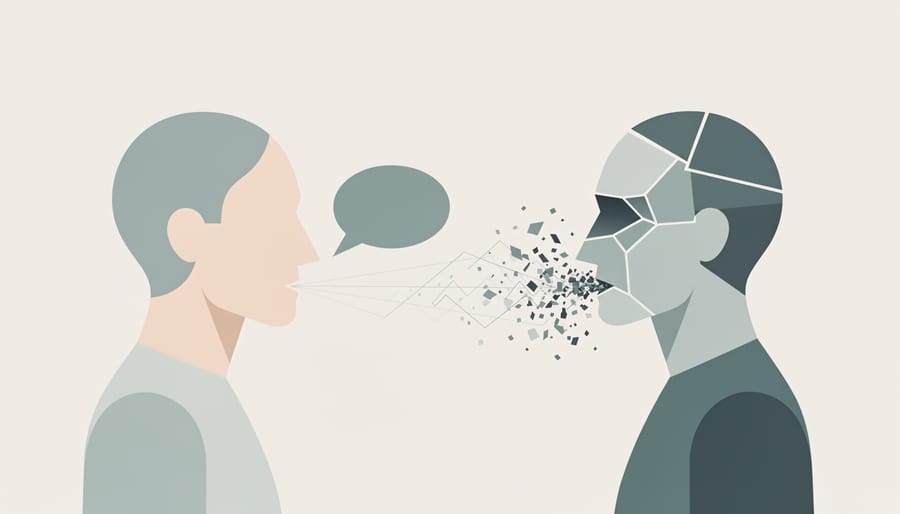
Passive Communication
Passive communicators struggle to voice their own needs, opinions, or boundaries. They often stay quiet even when something matters deeply to them, agreeing outwardly while feeling resentful or overlooked inside. This pattern frequently intensifies during mental health challenges, someone experiencing low mood and withdrawal may find it even harder to speak up, believing their feelings don’t matter or fearing conflict will worsen their situation.
Verbally, passive communicators use hesitant language: “I don’t mind,” “whatever you think is best,” or “it’s fine” when it really isn’t. Non-verbally, they avoid eye contact, speak softly, and adopt closed body language that signals discomfort or invisibility.
The mental health impact runs deep. Bottling up emotions fuels anxiety, builds resentment, and reinforces the belief that your voice has no value. Recovery becomes harder when you can’t advocate for your needs in therapy, relationships, or daily life. Recognizing this pattern is essential, it’s not about forcing yourself to be louder, but learning that your thoughts and boundaries deserve space.
Aggressive Communication
Aggressive communicators express their needs through forceful, often hostile language that prioritizes their own perspective while disregarding how others feel. You’ll recognize this style through loud voices, interruptions, blaming statements, and rigid body language like pointing fingers or invading personal space. Phrases like “You always…” or “You never…” signal this pattern, as do threats and ultimatums designed to control conversations.
During mental distress, aggressive communication frequently intensifies. Someone struggling with untreated anxiety might lash out when feeling cornered or misunderstood. Depression can manifest as irritability that explodes into harsh words. When emotional pain goes unaddressed, frustration builds until it erupts in ways that damage relationships and isolate the very person who needs connection most.
This style creates a cycle that worsens mental health. Aggressive outbursts push away potential support systems, leading to guilt and shame afterward. The temporary release of expressing anger doesn’t resolve underlying issues, it compounds them. People on the receiving end withdraw or respond defensively, making genuine communication impossible.
The roots often trace to learned behavior, past trauma, or feeling powerless in other areas of life. Recognizing aggression in yourself isn’t about self-judgment; it’s about understanding that healthier expression is possible with support and practice.
Passive-Aggressive Communication
Passive-aggressive communication occurs when someone expresses negative feelings indirectly rather than addressing them openly. Instead of saying “I’m upset you cancelled our plans,” a passive-aggressive communicator might say “It’s fine, I didn’t want to go anyway” while clearly showing disappointment through tone or behavior.
This style often emerges when people feel unsafe expressing their true feelings directly. Someone with anxiety might agree to help when they’re overwhelmed, then “forget” or complete the task poorly. During depression, passive-aggressive patterns can intensify as emotional energy for direct confrontation depletes.
Common markers include backhanded compliments, sulking, the silent treatment, procrastination on promised tasks, and subtle sabotage. The person may deny anything is wrong when asked directly, creating confusion for others trying to understand what’s happening.
This communication pattern damages relationships because it leaves issues unresolved while breeding resentment on both sides. For mental health recovery, passive-aggressive habits prevent genuine connection and make it harder to receive the support you need. Recognizing these patterns in yourself is crucial for developing healthier, more direct ways to express difficult feelings.
Assertive Communication
Assertive communication stands out as the most balanced and constructive style, particularly valuable during mental health challenges. People who communicate assertively express their thoughts, feelings, and needs clearly and directly while simultaneously respecting the rights and boundaries of others. They use “I” statements (“I feel overwhelmed and need some time alone”) rather than blaming or attacking, and they can say no without guilt or aggression.
This style supports mental wellness because it reduces internal conflict and resentment that build up when needs go unmet. Research on assertive communication and stress shows that expressing yourself honestly lowers anxiety and strengthens self-esteem. During crises, assertive communicators can advocate effectively for the help they need, whether requesting specific support from loved ones or engaging in therapeutic communication with mental health professionals.
Unlike passive communicators who bottle up distress or aggressive ones who lash out, assertive individuals create space for genuine connection and problem-solving. They acknowledge their struggles without shame and ask for what would genuinely help.
Manipulative Communication
Manipulative communication involves indirectly controlling or influencing others through guilt, deception, or strategic misdirection to get needs met without stating them openly. People using this style might employ tactics like playing the victim, giving backhanded compliments, withholding information, or twisting facts to shift responsibility or gain advantage.
This pattern often develops from deep insecurity, fear of rejection, or past experiences where direct communication felt unsafe or unsuccessful. During mental distress, manipulative behaviors can intensify as anxiety or depression erodes confidence in straightforward expression. Someone struggling might feel convinced that honest requests will be denied or that their needs don’t matter unless they’re obtained through indirect means.
Manipulative communication damages trust and creates confusion in relationships, leaving both parties emotionally drained. The person using manipulation rarely feels truly heard or satisfied because their actual needs remain unspoken. Those on the receiving end may feel exploited, anxious, or second-guess their perceptions.
Recognizing manipulative patterns, in yourself or others, requires honest self-reflection and often professional support. Therapy can help uncover the underlying fears driving manipulation and build skills for direct, authentic expression. Recovery involves learning that vulnerability and clear requests are strengths, not weaknesses, and that genuine connection requires honesty.
Submissive Communication
Submissive communication goes beyond occasional deference, it’s a persistent pattern where someone consistently places others’ needs, opinions, and comfort ahead of their own, often at significant personal cost. People using this style typically struggle to set boundaries, say no, or voice disagreement, even when their wellbeing is at stake.
During mental health challenges, submissive communication often intensifies. Anxiety amplifies the fear of rejection or conflict, making it feel safer to agree than advocate for yourself. Low self-worth reinforces the belief that your needs matter less than others’, creating a cycle where you dismiss your own feelings as unimportant or burdensome.
Common markers include apologizing excessively (even when you’ve done nothing wrong), agreeing to requests that overwhelm you, downplaying your achievements, and using self-deprecating language. Many submissive communicators describe feeling invisible or unheard, yet they actively minimize themselves to avoid making waves.
The mental health impact cuts both ways. This communication style can stem from anxiety, depression, or past experiences where asserting yourself felt unsafe. It also perpetuates these conditions, suppressing your needs breeds resentment, exhaustion, and deeper feelings of worthlessness. Over time, the disconnect between what you feel and what you express widens, making authentic relationships and recovery more difficult. Recognizing this pattern is essential because changing how you communicate can directly improve your emotional health and sense of agency.
How Communication Styles Are Used in Mental Health Support
Understanding communication styles transforms how you give and receive mental health support. When you recognize patterns, yours and others’, you can navigate difficult conversations with more clarity and compassion.
Self-awareness opens the door. Start by noticing how you typically express needs, especially when you’re struggling. Do you withdraw and go silent (passive), snap at loved ones (aggressive), or agree to things you can’t handle (submissive)? Identifying your default pattern helps you course-correct in real time. During therapy sessions, sharing your communication tendencies gives your therapist crucial context for how to reach you when things get hard.
Reading others’ styles improves every interaction. If a friend consistently deflects with humor when you ask how they’re doing, you might be seeing passive-aggressive avoidance. A family member who dominates conversations about their feelings but dismisses yours is showing aggressive traits. Recognizing these patterns isn’t about judgment, it’s about adjusting your approach. You might need to ask more direct questions with a passive communicator or set firmer boundaries with an aggressive one.
Crisis communication requires intentional shifts. When supporting someone in mental distress, match assertive communication: “I’m worried about you and I’m here to listen” works better than vague offers. If you’re the one struggling, practice asking directly for what you need rather than hoping others will guess. Expert-backed strategies for these moments include:
- Name your feelings plainly rather than masking them with “I’m fine”
- Use “I” statements to express needs without blaming others
- Set clear boundaries about what help you can accept right now
- Ask specific questions when checking on someone instead of generic “How are you?”
- Acknowledge when communication breaks down and suggest taking a break to regroup
Therapists and crisis counselors train specifically to adapt their communication style to yours. If you tend toward passive communication, they’ll create safe openings for you to speak. If you’re aggressive when anxious, they’ll stay calm and redirect without taking it personally.
Caregivers and friends benefit from learning to communicate during distress by observing what helps and what escalates tension. Sometimes the most supportive thing you can do is simply state, “I don’t know the right words, but I care about you and I’m not going anywhere.” When situations feel urgent or beyond your capacity, pointing someone toward suicide prevention resources is not giving up, it’s ensuring they get professional support designed for crisis moments.
The goal isn’t perfection. It’s building awareness so that even when mental health challenges make communication harder, you have tools to keep connection alive.
Recognizing Your Communication Style During Difficult Times
Identifying your communication style isn’t always straightforward, especially when anxiety, depression, or overwhelming stress clouds your judgment. You might normally express yourself assertively but find yourself shutting down completely during a difficult period. Or perhaps stress triggers passive-aggressive responses you wouldn’t typically use.
Start by noticing how you respond in challenging conversations. Do you apologize excessively, even when you’ve done nothing wrong? That might signal passive or submissive patterns. Do you find yourself snapping at people or dominating discussions when you’re overwhelmed? That could point toward aggressive tendencies under pressure. Pay attention to your body language, too, crossed arms, avoiding eye contact, or tense posture reveal as much as your words.
Keep a simple record of interactions that feel significant during tough weeks. Note what you said, how you felt, and whether you expressed your actual needs. Over time, patterns emerge. Review practical examples of different communication approaches to compare against your own responses.
Remember, recognizing your pattern isn’t about self-criticism. It’s about gaining insight. Mental distress often intensifies whatever style you default to, making it more obvious but also more challenging to manage. Awareness is genuinely the first step toward change, you can’t adjust what you don’t notice. Be patient with yourself as you observe these patterns without judgment.
Types of The 6 Communication Styles
The six communication styles fall into two primary categories based on their impact on mental health and relationship dynamics.
Healthy Communication
Assertive communication stands alone as the constructive style that supports mental wellness. It balances self-expression with respect for others, making it the most effective approach during mental health challenges. People using this style can articulate their needs clearly without aggression or withdrawal.
Unhealthy Communication
The remaining five styles create barriers to genuine connection and can worsen mental distress:
– Passive and submissive styles both involve self-silencing, though passive communicators avoid conflict while submissive ones actively prioritize others at their own expense
– Aggressive communication dominates interactions through hostility or intimidation
– Passive-aggressive style expresses negativity indirectly through sarcasm, silent treatment, or subtle sabotage
– Manipulative communication relies on deception, guilt, or control tactics
During anxiety or depression, unhealthy patterns often intensify. Someone typically passive might become more withdrawn, while an aggressive communicator may lash out more frequently. Recognizing which category your style falls into helps you understand whether your communication supports or undermines your mental health recovery.
Common Questions About Communication Styles and Mental Health
Common Questions About Communication Styles and Mental Health
Understanding how communication styles intersect with mental health often raises practical questions about change, relationships, and crisis moments. These answers offer clarity and reassurance for anyone navigating these challenges.
Can therapy help change my communication style?
Yes, therapy provides a supportive environment to identify unhelpful patterns and develop assertive communication skills. Therapists use techniques like cognitive behavioral therapy and role-playing to help you practice healthier ways of expressing yourself.
What if my partner and I have conflicting communication styles?
Conflicting styles are common but manageable with awareness and effort from both sides. Start by discussing your patterns openly, practice active listening, and consider couples counseling if miscommunication persists or escalates emotional distress.
How do I communicate during a panic attack?
During a panic attack, communication becomes difficult as your nervous system floods with stress hormones. If you can, use simple phrases like “I need space” or “I’m having a panic attack” to signal your state, and focus on grounding techniques before attempting complex conversations.
Is it normal for my communication style to change when I’m depressed?
Absolutely. Depression often shifts people toward more passive or withdrawn communication as energy drops and negative self-talk increases. Recognizing this pattern helps you and your support network understand that the change reflects your mental state, not your character.
Remember that questions about your communication patterns signal self-awareness, which is a strength. If you’re struggling to communicate effectively during mental distress, reaching out to a mental health professional can provide personalized strategies and support. Your communication style is not fixed, and small, consistent changes can significantly improve your relationships and overall mental wellness over time.
Recognizing how you communicate during mental distress opens the door to healthier relationships, better self-advocacy, and more effective support. The six communication styles, passive, aggressive, passive-aggressive, assertive, manipulative, and submissive, each carry their own strengths and challenges, but understanding your patterns gives you the power to make intentional choices rather than react on autopilot when emotions run high.
Moving toward assertive communication takes time and patience, especially if you have spent years defaulting to patterns that once felt protective but now hold you back. Progress is not linear. You will have moments when anxiety or depression pulls you back into old habits, and that is okay. What matters is your commitment to noticing, adjusting, and trying again.
You do not have to navigate this journey alone. Therapists, support groups, and trusted friends can help you recognize blind spots, practice new approaches, and hold space for your growth. If you are struggling to express your needs or feel heard, reaching out for professional support is a sign of strength, not weakness.
Better communication is within your reach. Each conversation where you speak up for yourself, set a boundary, or ask for what you need is a step toward deeper connection and mental wellness. Trust that you can learn, grow, and build the communication skills that serve your health and relationships best.