The key difference is this: fear responds to a clear, immediate threat in front of you, while anxiety is a more persistent, internal state of worry that can linger even without a clear external trigger. If you’re feeling your heart race because a car swerves into your lane, that’s fear. If you’re lying awake at night replaying conversations or dreading situations that haven’t happened yet, you’re experiencing anxiety.
This distinction matters because understanding what you’re feeling is the first step toward managing it effectively. Fear serves a vital protective function, activating your body’s fight-or-flight response to keep you safe from danger. It typically subsides once the threat passes. Anxiety, on the other hand, involves worry that outlasts the situation or exists without an obvious cause, and when it becomes intense enough to interfere with your daily life for weeks or months, it may signal an anxiety disorder.
The need to understand this difference has never been more urgent. Anxiety has become one of the most prevalent mental health concerns in the United States, particularly since the COVID-19 pandemic. Research shows a 26 percent increase in diagnosed anxiety disorder cases globally since the pandemic began, with rates reaching as high as 21.4 percent of U.S. adults reporting significant anxiety symptoms during peak restriction periods in 2020. Adolescents and young adults face especially high risk.
Recognizing whether you’re dealing with appropriate fear or problematic anxiety helps you decide when to use self-management techniques and when to seek professional support through psychotherapy, medication, or both.
Fear vs. Anxiety: Quick Reference
| Characteristic | Fear | Anxiety |
|---|---|---|
| Trigger Type | Specific, identifiable external threat | Internal worry; may persist without clear external trigger |
| Duration | Short-lived, resolves when threat passes | Persistent; can last weeks or months |
| Intensity Relative to Situation | Proportionate to the actual threat | Often more intense than the situation warrants |
| Ability to Control Thoughts | Thoughts are reality-based and manageable | Thoughts are difficult to control or stop |
| Impact on Daily Functioning | Minimal; normal activities resume quickly | Interferes with everyday functioning and routines |
This table offers a quick way to identify whether what you’re experiencing leans more toward fear or anxiety. Fear anchors itself to something concrete happening right now, while anxiety lives in your mind regardless of whether a real threat exists. The distinction matters because anxiety becomes a disorder when the worry grows disproportionate and starts disrupting your life for extended periods. If you’re scanning this table and finding yourself consistently in the anxiety column, particularly if those feelings have persisted for weeks, that’s a signal worth paying attention to.
Understanding What Fear and Anxiety Really Are
What Fear Is

Fear is your brain’s alarm system responding to danger right in front of you. When you encounter a specific, identifiable threat, a car swerving into your lane, a growling dog blocking your path, or standing at the edge of a cliff, your body reacts immediately. This reaction isn’t a flaw in your system. It’s an adaptive response that has kept humans alive for millennia.
The fear response happens fast because it needs to. Your heart races, your muscles tense, and your attention narrows completely onto the threat. These changes prepare you to fight, flee, or freeze, whichever gives you the best chance of staying safe. The key characteristic of fear is that it’s tied to something real and present. You can point to the cause.
Fear also tends to be short-lived. Once the threat passes, the car moves back into its lane, the dog walks away, you step back from the edge, your body starts to calm down. The intensity matches the situation you’re facing, then fades when the danger is gone.
This immediate, reality-based quality separates fear from its cousin, anxiety. While both involve similar brain responses, including amygdala activation in anxiety and fear states, the difference lies in what triggers them and how long they last. Fear keeps you safe from clear and present dangers. What happens when the worry lingers without that concrete threat? That’s where anxiety enters the picture.
What Anxiety Is
Anxiety is a persistent internal state of worry and apprehension that differs fundamentally from normal, fleeting concern. Unlike fear, which responds to specific threats, anxiety can arise without clear external triggers or continue long after a situation has passed. It’s the unease that lingers in your chest when there’s nothing concrete to point to, the racing thoughts that won’t quiet even when you’re safe.
Everyone experiences anxiety sometimes, whether sparked by something reality-based or purely imagined, but these reactions tend to be short-lived. The distinction between normal anxiety and an anxiety disorder comes down to four critical factors: intensity, duration, controllability, and impact.
Anxiety becomes a disorder when the worry is more intense than a situation warrants, persists for weeks or months, proves difficult to control, and interferes with everyday functioning. A person with an anxiety disorder might spend hours each day consumed by worries they know are excessive, find themselves unable to concentrate at work, or avoid activities they once enjoyed because the anxious thoughts have become overwhelming.
Like fear, anxiety activates the amygdala, the brain’s threat-detection center. But while fear’s activation is proportionate and brief, anxiety keeps this system engaged even when no actual danger exists. This chronic activation is what makes anxiety feel so exhausting, your brain is stuck in a state of vigilance with no clear endpoint.
The good news? Anxiety can be treated effectively using psychotherapy, medication, or both, offering genuine relief for those experiencing it.
How Fear and Anxiety Differ: A Closer Look
Trigger and Source
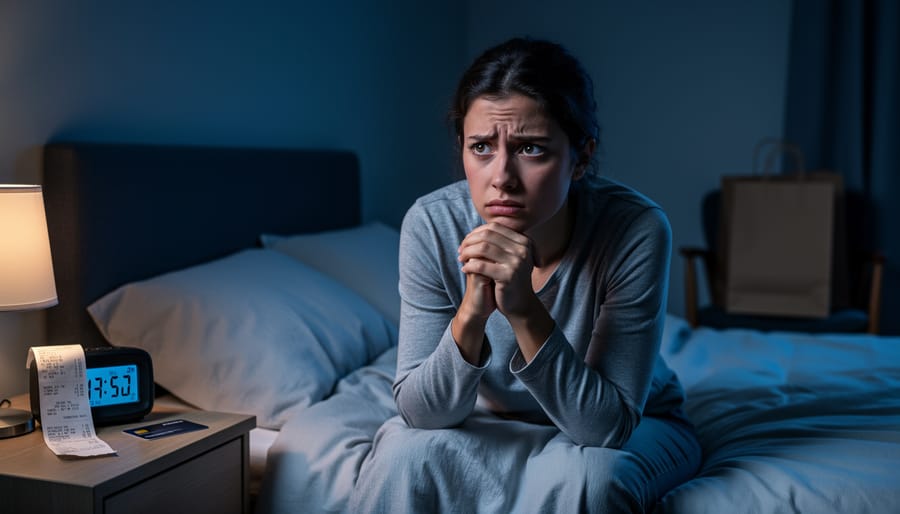
The clearest way to tell fear from anxiety is to look at what sets them off. Fear kicks in when you face a concrete, identifiable threat, a snarling dog, a near-miss on the highway, or a spider crawling up your arm. The danger is right there, and your body reacts to protect you from it.
Anxiety works differently. It can surface without any clear external trigger, or it can linger long after a real threat has passed. You might worry intensely about a presentation that’s weeks away, or feel dread in situations that pose no actual danger. This is where the two diverge: fear responds to what’s happening now; anxiety responds to what might happen, what you imagine could go wrong, or nothing specific at all.
Managing shopping anxiety illustrates this perfectly. While a crowded store might trigger mild discomfort in anyone, anxiety can make the worry far more intense than the situation warrants, you might ruminate for days about a simple errand, feeling dread over decisions that carry minimal consequence. That’s the hallmark of anxiety: the internal worry exceeds the external reality.
Duration and Intensity
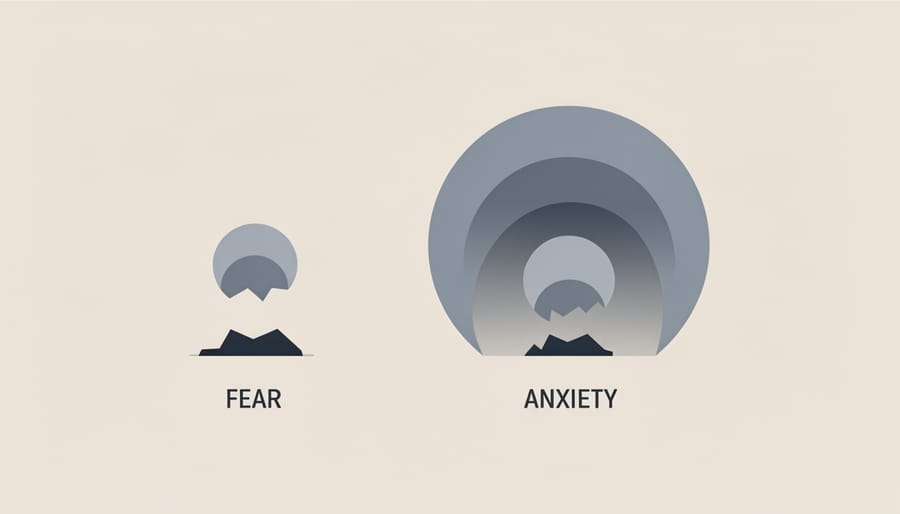
Fear hits fast and fades quickly once the danger passes. When you nearly step into traffic, your heart races, but within minutes of reaching the sidewalk safely, your pulse settles and the alarm subsides. That’s fear doing its job: intense in the moment, then gone.
Anxiety works differently. It lingers. The worry doesn’t require an immediate threat to sustain itself, and it often outlasts any reasonable reaction to the situation. You might feel anxious about a presentation for days beforehand, or find yourself unable to shake worry about finances even when your bills are paid. Everybody gets anxious sometimes, but the reactions tend to be short-lived in healthy responses.
When anxiety persists for weeks or months, when the intensity exceeds what the situation actually warrants, and when the thoughts interfere with your daily functioning, it crosses into disorder territory. That’s the critical distinction: fear matches the threat and resolves with it, while anxiety can feel disproportionately intense and refuses to let go even after the stressor has passed. If your worry has stretched beyond a few weeks and you’re struggling to control it, you’re likely dealing with anxiety rather than fear.
Control and Impact on Daily Life
When fear strikes, you can usually regain your composure once the threat passes or you remove yourself from the situation. The response subsides naturally because it’s tied to something concrete and time-limited. Anxiety operates differently, the thoughts loop and spiral, creating what’s known as the cycle of anxiety that feels impossible to stop even when you recognize it’s happening.
This loss of control becomes clearest in how anxiety bleeds into everyday life. While fear might make you cancel one specific activity, anxiety erodes your functioning across multiple areas. The worry becomes pervasive, showing up during work meetings, social gatherings, and quiet moments at home. You know these signs indicate your worry has crossed into disorder territory:
- Thoughts feel impossible to control or dismiss despite your efforts
- Daily tasks, work performance, or relationships suffer noticeably
- The worry persists for weeks or months rather than days
- Your reaction intensity far exceeds what the situation warrants
Fear rarely interferes with your ability to function once the immediate threat ends. Anxiety, by contrast, becomes the background noise that distorts your decision-making and keeps you from living fully, even when there’s no real danger in sight.
Physical and Emotional Symptoms
Both fear and anxiety trigger similar physical reactions, racing heart, rapid breathing, muscle tension, sweating, because they activate overlapping stress response systems in your body. You might feel trembling, dizziness, or a knot in your stomach with either experience.
The emotional differences matter more for identification. Fear produces an acute sense of immediate danger focused on a specific threat: “That car is about to hit me.” The emotional intensity spikes quickly but typically fades once the threat passes. Anxiety generates persistent, often diffuse worry that’s harder to pin down: “What if something bad happens?” This worry can cycle repeatedly through your mind, even when you’re physically safe, creating ongoing tension that doesn’t resolve as quickly. With anxiety, you might feel restless, on edge, or unable to relax even when nothing threatening is actually happening right now. The emotional pattern persists beyond the intensity the situation warrants, whereas fear’s emotional surge matches the reality of the threat you’re facing.
Recognizing What You’re Experiencing: A Practical Guide
Figuring out whether you’re dealing with fear or anxiety starts with asking yourself a few targeted questions. Can you point to a specific, immediate threat that’s causing your reaction? If yes, you’re likely experiencing fear. If the worry feels more diffuse or persists even when you can’t identify a clear danger, anxiety is the more probable answer.
Duration offers another reliable clue. Fear typically fades once the threat passes or you remove yourself from the situation. You see a car swerving into your lane, you react with alarm, you correct your steering, and within minutes your heart rate settles. Anxiety, by contrast, doesn’t respect those boundaries. The worried thoughts keep circling even after the triggering situation ends, sometimes for hours, days, or weeks.
Proportion matters too. Consider shopping as a concrete example. Feeling nervous about affording groceries when your budget is genuinely tight represents a reality-based concern that might involve some fear. Becoming so anxious about a routine shopping trip that you avoid stores entirely, even when you have adequate funds, signals that your emotional response has exceeded the situation itself.
Your ability to control the thoughts provides another diagnostic marker. With fear, you can usually redirect your attention once the threat diminishes. Anxiety resists that control. You might tell yourself repeatedly that there’s nothing to worry about, yet the thoughts persist, looping back no matter how many times you try to dismiss them.
Finally, assess how your emotional state affects your functioning. Fear might make you cancel plans for the specific moment you feel threatened, but anxiety infiltrates broader areas of your life. If you’re avoiding social gatherings, struggling to concentrate at work, losing sleep, or finding that worry dominates your mental space for weeks on end, you’re likely dealing with anxiety that warrants attention. When these patterns interfere with everyday functioning and the thoughts prove difficult to control over an extended period, the worry has crossed into disorder territory.
Who Should Be Concerned About Fear vs. Who Needs Anxiety Support
Fear is a normal human emotion that rarely requires professional intervention. When you experience a fear response to a genuine threat, a near-miss in traffic, an aggressive dog, a precarious financial situation, the intensity matches the reality, and the feeling typically fades once the danger passes. You can generally manage these reactions through natural coping mechanisms: deep breathing, talking with friends, or simply allowing time to process the experience.
Anxiety, however, demands attention when it crosses into disorder territory. You should seek professional support if your worry is more intense than a situation warrants, persists for weeks or months, proves difficult to control, and interferes with everyday functioning. These aren’t just uncomfortable feelings, they’re signs that your brain’s threat-response system needs recalibration through therapy, medication, or both.
Certain groups face higher risk and should monitor their mental health particularly closely. Adolescents and young adults are especially prone to anxiety, a vulnerability that became starkly evident during the COVID-19 pandemic. In April 2020, at the height of pandemic restrictions, 21.4 percent of U.S. adults reported high anxiety levels, with rates remaining above 8 percent through year-end. Globally, diagnosed anxiety disorder cases increased 26 percent since the pandemic began, reaching 4,802 cases per 100,000 people. If you fall into this age group, even moderate symptoms warrant a conversation with a mental health professional.
The decision between self-management and professional treatment often comes down to functioning. Ask yourself: Am I still meeting work deadlines, maintaining relationships, sleeping reasonably well, and engaging in activities I enjoy? If anxiety has derailed any of these areas for more than a couple of weeks, professional support isn’t just helpful, it’s appropriate and effective. Anxiety responds well to treatment, and seeking help early prevents the spiral where worry about your anxiety compounds the problem itself.
The Rise in Anxiety Since the Pandemic

The COVID-19 pandemic fundamentally shifted our collective mental health landscape. Research reveals a striking 26 percent global increase in diagnosed anxiety disorder cases since the pandemic began, bringing prevalence to 4,802 cases per 100,000 people. In the United States, the numbers tell an even more dramatic story: at the pandemic’s peak in April 2020, 21.4 percent of adults reported high anxiety levels. While rates declined as restrictions eased, they remained above 8 percent through year-end, well above pre-pandemic baselines.
These statistics matter because they reflect millions of people experiencing persistent worry that goes beyond reasonable fear responses to genuine health threats. The pandemic created a unique situation where an initial fear reaction (to a real virus) transformed for many into ongoing anxiety disconnected from immediate danger. Understanding this distinction helps explain why some people bounced back quickly while others continue struggling years later.
Adolescents and young adults proved especially vulnerable to pandemic-related anxiety, facing isolation during critical developmental periods. For this generation and others still experiencing heightened worry, knowing what helps anxiety attacks becomes essential, particularly when anxious thoughts prove difficult to control and interfere with daily functioning. The lingering effects of pandemic-era anxiety underscore why distinguishing between appropriate fear and problematic anxiety matters more than ever for mental wellness.
Treatment Approaches for Anxiety
When anxiety persists and interferes with your daily life, effective treatment exists. Research consistently shows that anxiety can be treated using psychotherapy, medication, or both, and finding the right approach often depends on the severity of your symptoms and your personal preferences.
- Psychotherapy
- Talk therapy approaches, particularly cognitive-behavioral therapy (CBT), help you identify and change thought patterns that fuel anxiety. These evidence-based techniques teach practical skills for managing anxious thoughts and gradually facing feared situations.
- Medication
- Anti-anxiety medications work by adjusting brain chemistry to reduce symptoms and make daily functioning easier. Common options include SSRIs, SNRIs, and benzodiazepines for short-term relief during acute episodes.
- Combined Treatment
- Using both psychotherapy and medication together often produces the best outcomes for moderate to severe anxiety disorders. Medication provides symptom relief while therapy builds long-term coping skills.
For many people, psychotherapy alone provides lasting relief. CBT, the most extensively studied approach for anxiety disorders, typically involves 12-16 weekly sessions where you work with a therapist to challenge distorted thinking and practice new responses. Exposure therapy, a component of CBT, proves especially effective for specific anxieties by helping you gradually confront feared situations in a controlled way.
Medication becomes particularly valuable when anxiety severely disrupts your ability to function or when therapy alone hasn’t provided sufficient relief. Your doctor can help determine whether medication makes sense for your situation, including when to seek emergency help during severe episodes.
The choice between approaches depends partly on anxiety type. Understanding distinctions like agoraphobia vs social anxiety helps tailor treatment to your specific experience. Meanwhile, practical strategies for managing situational anxiety, such as shopping-related worry, can complement professional treatment and build confidence in everyday situations.
What Each Option Is
Anxiety is one of the most prevalent mental health challenges in the United States and elsewhere, particularly since the COVID-19 pandemic. For anxiety disorders specifically, treatment falls into three main approaches: psychotherapy alone, medication alone, or a combination of both.
Psychotherapy involves working with a trained mental health professional to identify thought patterns, behaviors, and triggers that fuel anxiety. Common evidence-based approaches include cognitive-behavioral therapy (CBT), which helps you recognize and change anxious thinking, and exposure therapy, which gradually reduces fear responses through controlled confrontation with anxiety triggers. These sessions typically occur weekly and equip you with practical tools to manage worry before it escalates into overwhelming distress.
Medication uses prescribed drugs, usually selective serotonin reuptake inhibitors (SSRIs), serotonin-norepinephrine reuptake inhibitors (SNRIs), or benzodiazepines, to regulate brain chemistry and reduce anxiety symptoms. SSRIs and SNRIs work over several weeks to stabilize mood, while benzodiazepines provide faster relief but carry dependency risks with long-term use.
Combined treatment pairs psychotherapy with medication, offering symptom relief while simultaneously building coping skills. This approach often yields the strongest results for moderate to severe anxiety disorders, since medication can calm symptoms enough for therapy to be more effective.
Who Should Choose Which
When what you’re experiencing is a direct, proportionate response to a specific threat that fades once the danger passes, you’re dealing with normal fear, no intervention needed. This is your body’s healthy protection system working as designed.
Seek anxiety support if your worry persists for weeks or months, feels more intense than the situation warrants, proves difficult to control despite your efforts, or interferes with your everyday functioning, work, relationships, sleep, or daily activities. These are the clinical markers that distinguish anxiety disorders from ordinary stress.
Adolescents and young adults should be especially attentive to persistent worry patterns, as this age group shows heightened vulnerability to anxiety disorders. If you’re in this demographic and notice ongoing symptoms, early intervention prevents escalation.
Professional help becomes essential when anxiety disrupts your life quality, regardless of whether you can identify a clear trigger. The absence of an obvious external cause doesn’t make your anxiety less real or less treatable, it actually reinforces that you’re experiencing anxiety rather than situational fear.
Both psychotherapy and medication offer proven effectiveness for anxiety treatment, often working best in combination. If you’re uncertain whether your symptoms warrant professional attention, err toward consultation. Anxiety responds well to treatment when addressed early.
Common Questions About Fear and Anxiety
Can you experience both fear and anxiety at once?
Yes, it’s entirely possible to feel both simultaneously. You might experience fear in response to an immediate threat while also carrying underlying anxiety about related worries. The two emotional states can overlap and influence each other.
How do I know if my anxiety is normal or something more serious?
Everyone gets anxious sometimes, and these reactions tend to be short-lived. Anxiety becomes a disorder when the worry is more intense than a situation warrants, it persists for weeks or months, the thoughts of worry are difficult to control, and they interfere with everyday functioning.
When should I see a professional about my anxiety?
Seek professional help if your anxious thoughts persist beyond a few weeks, feel impossible to control, or start limiting your daily activities, whether that’s avoiding social situations, struggling at work, or withdrawing from things you used to enjoy. Adolescents and young adults experiencing persistent anxiety should reach out early, as this age group is especially prone to anxiety.
Can anxiety be cured?
While anxiety may not be “cured” in the sense of never experiencing it again, it can be effectively treated and managed. Psychotherapy, medication, or both can significantly reduce symptoms and help you regain control over your thoughts and daily life.
Understanding when your emotional responses cross from normal to concerning makes all the difference in getting the support you need. The key isn’t whether you feel anxious, most people do, but whether that anxiety has taken on a life of its own, persisting without clear reason and disrupting the things that matter to you.
Remember that anxiety is associated with activation of the amygdala, the brain’s threat-detection center, which explains why anxious thoughts can feel so urgent and real even when there’s no immediate danger. This neurological reality doesn’t mean you’re stuck with overwhelming worry. With the right approach, whether that’s therapy techniques, medication, or a combination of both, you can train your brain to respond differently and reclaim your sense of calm.
Understanding the difference between fear and anxiety isn’t just an academic exercise, it’s a crucial step in taking care of your mental health. Fear responds to real, immediate threats and fades when the danger passes. Anxiety persists as an internal state of worry that can linger even without a clear external trigger, often more intense than the situation warrants and difficult to control when it becomes a disorder.
If you’ve recognized anxiety in yourself while reading this article, take heart: anxiety is highly treatable through psychotherapy, medication, or both. You’re not alone in this experience, especially given the significant increases in anxiety prevalence since the pandemic began. Adolescents and young adults face particular vulnerability, but people of all ages can benefit from understanding what they’re feeling and seeking appropriate support.
Use this knowledge as a starting point for self-awareness. If your worry persists for weeks, interferes with daily life, or feels overwhelming, professional help can make a real difference. Explore the mental wellness resources and practical strategies available here to support your journey toward better emotional health.