Research peptides are lab-grade compounds that scientists use to study how the brain works, and a responsible evaluation comes down to five checks: where the material came from, what documentation backs it, how it’s stored, what safeguards govern its use, and who is overseeing the work. If you’ve seen these compounds promoted online as quick fixes for anxiety, depression, or memory problems, that framing deserves a pause. Research use and personal use are very different things.
A trustworthy source is the starting point. A peptide supplier for research use should provide batch-specific testing records, clear labeling that the material is not for human consumption, and straightforward answers about purity. Without those, nothing else in a study can be trusted.
Mental health neuroscience is a field where hope runs high. Many people living with anxiety or depression are looking for something that finally helps, and that’s completely understandable. But most peptide findings come from cell cultures and animal models, and early results often don’t hold up in people.
This article walks through how researchers vet these materials step by step, so you can tell careful science from marketing. We’ll also point you toward qualified professionals and proven care, because your wellbeing deserves more than an experiment.
What Research Peptides Are, and Why Brain Scientists Study Them
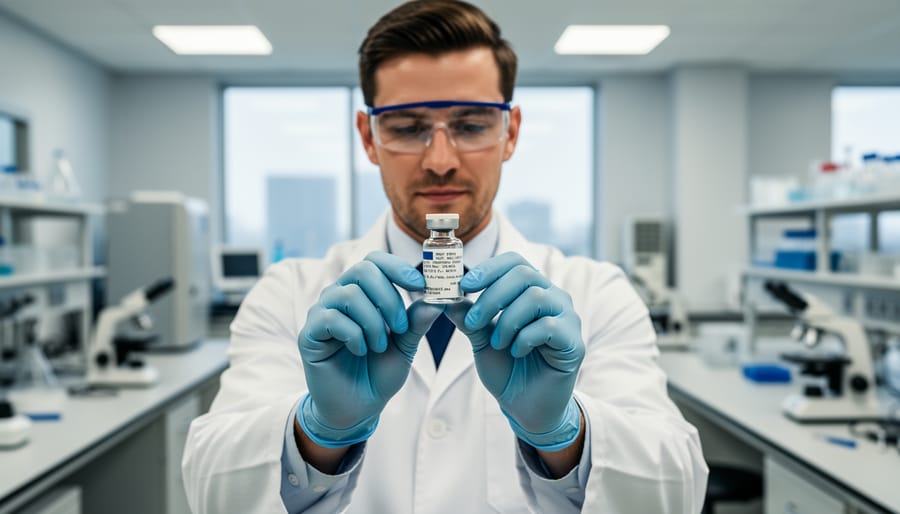
Research Use Versus Medical Use
A bottle labeled “for research use only” has not been reviewed by any regulator for use in people. That label means the material is meant for laboratory work, such as testing how a compound behaves in cells or animals. It says nothing about whether the compound is safe or helpful for a human body or mind.
A medication reviewed by regulators is different. Before approval, it goes through years of testing, strict manufacturing checks, and independent review of both benefits and risks. Here are a few terms that help show the gap:
- Peptide
- A short chain of amino acids, the building blocks of proteins, that the body often uses to send signals between cells.
- Research-grade material
- A compound made and labeled for laboratory experiments, not for use in people.
- Preclinical study
- Early testing in cells or animals to learn how a compound behaves, long before any human use.
- Clinical trial
- A carefully supervised study in volunteers that checks whether a treatment is safe and actually works.
- Approved medication
- A treatment that regulators have reviewed and cleared for a specific condition, with known dosing and monitored safety.
Why does this matter if you’re managing your mental health? When you’re struggling, a promising headline can feel like a lifeline, especially if worry keeps feeding the cycle of anxiety and you’re searching hard for relief. But research-only products skip the safeguards that protect you. Their purity, strength, and safety haven’t been verified for human use. Treatments that have been through the full review process give you something far more reliable to build on.
How Researchers Evaluate a Peptide Step by Step
Why Purity and Identity Come First
Before a scientist can say anything meaningful about a peptide, they have to know two basic things: exactly what the compound is, and how much of it is actually in the vial. That sounds obvious, but it’s the foundation everything else rests on. If the material isn’t what the label says, or it’s mixed with leftover chemicals from manufacturing, then any result, good or bad, tells us nothing reliable.
Think of it like testing a new recipe with ingredients you can’t identify. If the cake turns out strange, you can’t say whether the recipe or the ingredients were to blame. In brain research, the stakes are higher. A contaminated or mislabeled sample can produce misleading findings, and in the worst case it can be unsafe.
That’s why identity and purity checks come first, and why they sit at the start of a longer path:
- Confirm the compound’s identity and purity using independent laboratory testing.
- Run laboratory studies on cells to see how the compound behaves at a basic level.
- Move to animal studies only after an ethics committee reviews and approves the plan.
- Conduct a careful safety review of all results gathered so far.
- Begin regulated clinical trials with human volunteers, under strict oversight and informed consent.
Each stage builds on the one before it. If the first step is shaky, every step after it inherits that weakness, which is why careful researchers treat verification as non-negotiable rather than a box to tick.
Sourcing: Where Reputable Labs Get Their Materials
When researchers need a peptide for a study, they don’t simply order from the first website that appears in a search. Choosing a supplier is a careful decision, because everything that follows depends on knowing exactly what is in the vial.
Reputable research teams start by checking the supplier’s credentials. They look for manufacturers that operate under recognized quality standards, have a traceable business history, and can explain how their materials are made. A trustworthy supplier is happy to answer these questions. Evasiveness is itself a warning sign.
Next comes the testing evidence. Credible labs ask for independent analysis showing the compound’s identity and purity, and many run their own verification once the shipment arrives. They don’t take a label’s word for it. A bottle that says one thing may contain something quite different, and in a brain-related study, that gap can ruin the findings or put people at risk.
Researchers also work within their institutions. Purchasing is often routed through approved vendors, and records of where every batch came from are kept from day one.
Some red flags separate rigorous science from risky marketplaces:
– Sellers who make health claims, such as promises to lift mood or sharpen memory
– No clear contact information, company address, or accountability
– Missing or vague testing documents
– Pressure tactics, unusually low prices, or “miracle” language
– Willingness to sell to anyone, with no questions asked
If a seller markets directly to people hoping to feel better, that is a signal it isn’t operating the way careful science does. Rigorous research is quiet, documented, and cautious. Unregulated marketplaces tend to be loud, vague, and eager to close a sale.
Documentation: The Paper Trail That Protects Everyone

When a research team says a finding is “reliable,” what they really mean is that someone else could check it. That’s what documentation makes possible. Every vial or sample that enters a mental health or neuroscience study should come with a paper trail, so that if a result looks surprising, researchers can trace it back to the exact material and the exact steps used.
Think of it like the label and receipt for something you rely on for your wellbeing. Without them, you can’t be sure what you’re dealing with or where it came from.
| Document | What it shows | Why it matters |
|---|---|---|
| Certificate of analysis | Results of testing for identity and purity | Confirms the material is what it claims to be |
| Batch or lot number | Which production run the material came from | Lets problems be traced and compared across batches |
| Handling and storage log | Who handled the material, when, and under what conditions | Shows the compound stayed stable and secure |
| Study protocol | The planned methods, measures, and safety steps | Keeps researchers honest about what they set out to test |
Each record answers a different question, and together they build trust. A certificate of analysis tells scientists what is in the container. A lot number means that if one batch behaves strangely, others can be checked rather than guessed about. Logs show that nothing happened to the material along the way that could quietly change the outcome.
The study protocol matters just as much. It’s written down before the work begins, which prevents anyone from shifting goalposts after seeing the results.
Thorough record-keeping also lets other teams repeat an experiment. When independent researchers get the same result, confidence grows. When they can’t, the paper trail helps explain why, and that protects both the science and the people it’s ultimately meant to serve.
Storage and Handling Safeguards
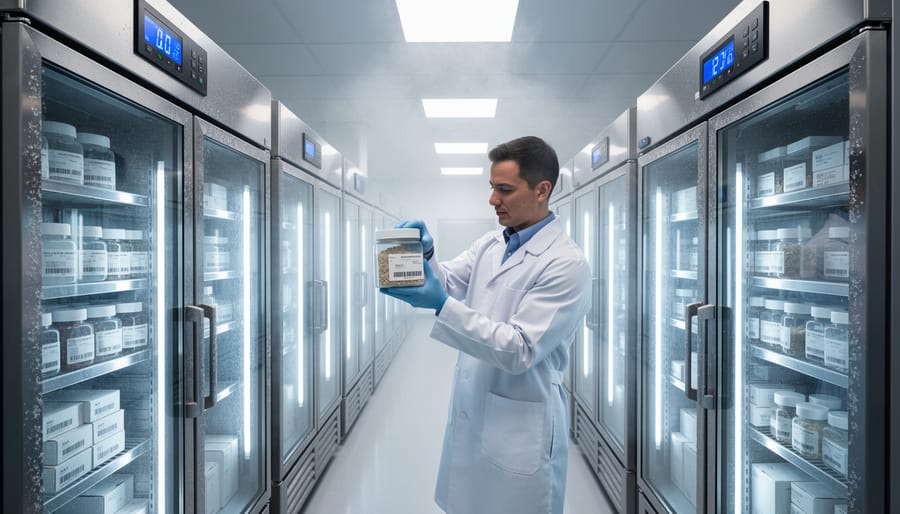
Think of how you’d store something delicate at home, like a prescription that has to stay refrigerated or a photograph you want to keep from fading. Research laboratories apply that same care, just far more rigorously, because peptides are sensitive materials. They can break down or change if they aren’t handled properly.
Temperature is usually the first safeguard. Many peptides are kept in freezers or refrigerators with continuous monitoring, so a failing unit triggers an alert before anything is lost. Light and moisture matter just as much. Materials are often kept in sealed, opaque containers with protection from humidity, since even small amounts of water or exposure to light can alter a compound over time.
Labeling is another quiet hero. Every container carries clear information about what’s inside, when it arrived, and which batch it came from. This keeps materials from being mixed up and lets a team trace any odd result back to its source.
Security plays a role, too. Access is typically limited to trained staff, and entries are logged, so only the right people handle sensitive materials and there’s always a record of who did.
Finally, labs track expiration dates carefully and set aside anything past its useful life. A compound that has degraded isn’t just less effective. It may behave in unexpected ways.
This is why storage isn’t a minor detail. Improper handling can change a compound’s makeup, which can compromise safety and make results unreliable. Careful storage helps ensure that what scientists study is truly what they think it is.
Laboratory-Use Safeguards and Ethical Oversight

Good research doesn’t rely on one safeguard. It layers several, so that no single mistake can put people or animals at risk.
It starts with the people in the lab. Researchers who handle peptides are trained in safe handling, and they follow written safety protocols covering protective equipment, ventilation, spill response, and proper disposal. These aren’t optional extras. Labs are routinely inspected to confirm that the rules are actually followed.
Next comes ethical review. Before a study involving animals can begin, an institutional animal care committee examines the plan. Its members ask whether the question is important enough, whether there is a less invasive way to answer it, and how the animals will be kept comfortable and monitored. Studies involving people face an even higher bar. An institutional review board, made up of scientists, medical professionals, and community members, reads the full protocol and can demand changes or refuse approval.
Informed consent is central to any human study. Participants are told in plain language what the research involves, what risks are known and unknown, and what alternatives exist. They are free to ask questions, take time to decide, and leave at any point without penalty. Consent is an ongoing conversation, not a one-time signature.
Once a study is underway, independent monitoring keeps it honest. Safety boards that aren’t connected to the research team review incoming data and can pause or stop a study if concerns appear. Adverse events must be reported, and results are shared through peer review so other experts can scrutinize them.
If you’ve ever worried that brain and mental health research happens without guardrails, these protections are worth knowing about. They exist because the people involved matter more than the findings.
What This Means If You’re Seeking Mental Health Support
If you’ve been scrolling through claims about brain-boosting or mood-lifting peptides, it makes sense to feel curious. When anxiety or low mood is weighing on you, the promise of a quick fix can feel like a lifeline. But research-only products haven’t been tested or approved for people, so there’s no reliable way to know what’s in them, how much to take, or what they might do alongside your body’s own chemistry or other medications.
The safest first step is a conversation with your doctor or a licensed mental health professional. They can listen to what you’re experiencing, rule out other causes, and walk you through options that have real evidence behind them. Therapy, approved medications, regular sleep, movement, and strong social support all help many people, and there is practical guidance on evidence-based anxiety relief you can start exploring today. If you’re unsure whether what you’re feeling is more than a rough patch, learning about common depression symptoms can help you decide when to talk to someone.
Please know that if a panic attack or a dark moment feels overwhelming or unsafe, it’s okay to seek emergency help right away. You don’t have to wait until things get worse. And if you’re not sure where to begin, it’s okay to reach out for help in whatever way feels manageable. Asking for support isn’t a weakness. It’s one of the strongest, most caring things you can do for yourself.
Are research peptides safe to try on my own?
No. Research-only products aren’t made or tested for human use, so their contents, strength, and safety can’t be trusted. A healthcare professional can point you toward options that have been properly studied.
How can I tell if a mental health claim is backed by science?
Look for results from reviewed human studies and guidance from reputable health organizations, not just testimonials or product pages. When in doubt, ask your doctor or therapist to help you weigh it.
Who can I talk to about treatment options?
Start with your primary care doctor, a licensed therapist, or a psychiatrist. If you’re in crisis, contact local emergency services or a crisis line right away.
You deserve care that’s safe, proven, and centered on you.
Trustworthy research doesn’t happen by accident. It happens because careful people verify where materials come from, keep a clear paper trail, store everything properly, and work under ethical oversight at every stage. When any one of those safeguards is missing, the results can’t be trusted, and the people who might one day depend on that research are the ones who pay for it.
It also helps to remember what an early lab finding really is: a question, not an answer. A peptide that shows interesting effects in a dish or an animal study has cleared one small hurdle on a very long road. Most compounds never make it to the end, and that’s exactly how the system is meant to work. The slow pace isn’t a flaw. It’s protection.
If you’re struggling with anxiety, low mood, memory worries, or another concern, you deserve support that has already earned your trust. A doctor or licensed mental health professional can talk through what you’re experiencing, explain options that have been tested and approved, and adjust your care as your needs change. Therapy, proven medications, healthy daily routines, and a good support network all have real evidence behind them.
You don’t have to figure this out alone, and you don’t have to chase shortcuts. Reaching out for help is a sign of strength, and your wellbeing is worth the care of people who are qualified to look after it.